Insights for CRM, AI Automation, and Customer Operations
Tactical guidance, market context, and implementation playbooks for teams modernizing customer experience across regions.
Try: Zendesk, CRM strategy, Logistics, AI automation

Live spotlight
Oct 17, 2025
How HubSpot CRM Helps Modern Businesses Stay Ahead
In a market where customer relationships define success, technology is no longer optional, but it’s essential. Modern businesses compete not only on product quality and pricing but on how efficiently they attract, engage, and retain customers. That’s exactly where HubSpot CRM stands out for helping organizations stay ahead with a single, connected platform built for real-time growth. HubSpot is not just another CRM; it is a complete ecosystem designed to help businesses manage every customer’s interaction with intelligence and precision. From lead tracking and automation to sales insights and customer support, HubSpot brings everything together in one powerful dashboard. Let’s explore how HubSpot CRM empowers modern businesses to stay ahead in a rapidly changing digital world. 1. A Unified View of Every Customer One of the biggest challenges for growing businesses is scaling customer data. Sales teams use spreadsheets; marketers rely on separate tools, and support staff often have no visibility into a customer’s history. HubSpot solves this by giving you a 360-degree view of every contact, including their interactions, preferences, emails, and deal stages. This unified database means your entire team operates from the same source of truth. When a sales rep follows up, they already know what marketing emails a lead has opened. When a support agent responds, they can see the client’s full history, no delays, no guesswork. 2. Seamless Integration Across Teams Modern businesses do not operate in silos, and neither should their systems. HubSpot CRM integrates smoothly with hundreds of business tools, including Gmail, Outlook, Slack, Shopify, WhatsApp, and more. This flexibility allows sales, marketing, and support teams to collaborate without switching between apps. For example: Marketing can track which campaigns generate the most leads. Sales can view those leads and instantly start nurturing them. Support can handle queries from the same CRM, ensuring a connected customer experience. The result? Fewer gaps, faster communication, and better customer satisfaction. 3. Automation That Saves Time and Boosts Efficiency Every growing business reaches a point where manual follow-ups and reminders become impossible. HubSpot automation takes over these repetitive tasks for sending follow-up emails, updating deal stages, assigning leads, and even scoring prospects based on engagement. With workflow automation, you can set up smart triggers. For instance, when a lead downloads your eBook or visits your pricing page, HubSpot can automatically notify your sales team or send a tailored email sequence. This level of automation means your team spends less time on routine work and more time closing deals. It’s not about replacing humans; it’s about empowering them to focus on what matters most: relationships and strategy. 4. Smarter Insights with Real-Time Reporting In today’s data-driven environment, guessing your next move can cost you valuable time and opportunities. HubSpot provides customizable dashboards and reports that show real-time performance across sales, marketing, and support. You can track metrics like lead conversion rates, deal stages, pipeline health, and email engagement. With these insights, businesses can make smarter, faster decisions, whether it’s identifying top-performing campaigns or forecasting revenue for the next quarter. The best part? HubSpot’s reports are visual and easy to understand, requiring no advance analytics degree. 5. Personalization at Every Stage of the Journey Customers no longer want generic emails or cookie-cutter marketing messages. They expect personalized experiences, and HubSpot delivers exactly that. HubSpot CRM collects valuable data about customer behavior, from email clicks to website visits. This enables businesses to craft targeted campaigns tailored to customers' interests and actions. Whether it’s a welcome series for new subscribers or a re-engagement email for inactive leads, HubSpot ensures your communication always feels relevant and timely. When personalization meets automation, engagement rates rise and customer trust deepens. 6. Empowering Sales Teams to Close More Deals For sales teams, speed and clarity make all the difference. HubSpot CRM gives sales reps for everything they need to manage leads and deals effectively, from contact timelines and notes to automated reminders and pipeline tracking. The Sales Hub within HubSpot offers tools for: Email tracking and scheduling Document sharing Quote creation and e-signature support Deal forecasting It’s a complete digital sales assistant that helps teams focus on prospects that matter most, while HubSpot handles the rest. 7. Marketing That Converts, Not Just Reaches Modern marketing is about understanding what drives conversions, not just generating clicks. HubSpot’s Marketing Hub integrates perfectly with its CRM, ensuring every lead that enters your system is tracked, nurtured, and analyzed. With features like smart forms, landing pages, and campaign analytics, businesses can measure exactly what’s working. HubSpot even helps you optimize your SEO strategy by tracking keyword performance and website health within the same platform. The result is a marketing engine that continuously improves itself, also learning from each campaign and adapting to audience behavior. 8. Strengthening Customer Support and Retention While most CRMs stop sales, HubSpot goes further by integrating customer support through its Service Hub. This allows businesses to manage tickets, track customer issues, and measure satisfaction in one place. Features like live chat, chatbots, and a shared inbox help support teams respond faster and smarter. You can even set up automated replies for common queries, ensuring no customer feels ignored. By uniting sales, marketing, and service data, HubSpot helps you see the full customer lifecycle, from first contact to loyal advocate. 9. Scalability That Grows with You One of HubSpot’s biggest advantages is its scalability. Whether you’re a small business or a large enterprise, HubSpot grows with your needs. You can start with the free CRM and expand into advanced hubs as your business evolves, without having to migrate data or switch platforms. This flexibility ensures long-term value. Businesses can integrate new tools, add users, and automate new processes effortlessly. It’s future-ready software built for growth-minded organizations. 10. A CRM Built for the Modern Customer Today’s customers expect quick responses, consistent service, and meaningful communication. HubSpot CRM is built with this modern customer in mind to combine data, automation, and personalization on one platform. By centralizing your operations, HubSpot makes your team more responsive and your business more adaptable. Whether you are nurturing leads, closing deals, or supporting customers, HubSpot ensures every interaction adds value and builds trust. Conclusion: Staying Ahead Starts with Connection Staying ahead in business today is not about doing more, it’s about doing things smarter. HubSpot CRM helps companies simplify their processes, understand their customers better, and deliver experiences that truly stand out. It brings sales, marketing, and support together in perfect sync, helping teams stay organized, productive, and proactive. Whether you are a startup aiming for structure or an enterprise looking for scale, HubSpot gives you the clarity, automation, and intelligence you need to lead the way. With HubSpot CRM, staying ahead is not just possible; it’s sustainable.

Refine insights
Market
Featured insight
Mastering Lead Nurturing with HubSpot Automation
In a market where every customer interaction counts, generating leads is not the hardest part anymore; keeping them engaged is. You might attract hundreds of potential customers every month, but without a clear nurturing strategy, most of them will lose interest before ever making a purchase. The challenge is not getting noticed; it’s staying relevant in the customer’s mind long enough to build trust and drive action. That’s where HubSpot automation changes the game. It helps businesses move beyond one-time interactions to create lasting relationships automatically. From personalized email workflows to smart segmentation, HubSpot ensures that every lead gets the right message at the right time, keeping your pipeline warm and your sales team focused on conversions, not manual follow-ups. Let’s explore how HubSpot’s automation tools help modern businesses master the art of lead nurturing, building relationships that convert interest into loyalty. What Is Lead Nurturing and Why It Matters Lead nurturing is the process of building relationships with potential customers by delivering relevant, personalized content and follow-ups until they are ready to buy. It’s not about bombarding leads with sales pitches. It’s about guiding them through the customer journey, answering their questions, solving their problems, and staying top of mind. Without nurturing, leads tend to get cold. Research shows that: Only 27% of the leads are ready to buy right away. Companies that excel at nurturing generate 50% more sales-ready leads at a 33% lower cost. So, how can a business maintain personalized engagement on a scale? That is where HubSpot automation changes the game. How HubSpot Makes Lead Nurturing Effortless HubSpot’s automation capabilities combine CRM data, email marketing, workflows, and behavioral tracking, allowing you to automate nurturing campaigns without losing the human touch. Here’s how it transforms your process: 1. Personalized Communication at Scale The old way of sending one-size-fits-all emails is gone. Customers today expect relevant and timely information. With HubSpot, you can segment leads based on: Their interests or content interactions Stage in the buying journey Industry or company size Past behavior (like website visits or downloads) Once these segments are set, HubSpot automatically sends targeted emails or content suggestions tailored to each audience. For example: Someone who downloaded an eBook on “CRM best practices” gets a follow-up email inviting them to a webinar on automation. A visitor who viewed your pricing page twice might receive a free consultation offer. Result: Every message feels relevant for increasing open rates, trust, and conversions. 2. Automated Workflows for Continuous Engagement HubSpot’s workflows are the backbone of automation. They let you create step-by-step nurturing journeys that run on autopilot. A workflow can look like this: A lead fills out a form on your website. HubSpot automatically sends a welcome email. Three days later, they receive a case study. If they open it, HubSpot notifies your sales team. If not, it sends a gentle reminder with another resource. This keeps your brand in touch with every lead, even while you sleep. Result: Consistent engagement, zero manual effort, and no missed opportunities. 3. Smart Triggers Based on Behavior One of HubSpot’s most powerful automation features is behavior-based triggers, actions that automatically respond to what your lead does. For example: If a contact visits your pricing page, HubSpot can send them a follow-up email with a discount or demo link. If they click on a specific service, HubSpot adds them to a related email sequence. These smart triggers make your communication feel real-time and relevant, rather than random or robotic. Result: Higher engagement and faster movement through the sales funnel. 4. Lead Scoring for Smarter Prioritization Not every lead is equal. Some are just browsing, while others are ready to make a decision. HubSpot’s lead scoring system helps your team focus on the right people by assigning scores based on engagement, like email opens, page views, or downloads. When a lead hits a certain score (for example, 80 points), HubSpot can automatically: Move them to the “sales-ready” list Notify your sales rep for outreach Trigger a tailored offer email Result: Sales teams spend time on high-quality leads instead of cold contacts. 5. Seamless Integration Between Marketing and Sales One of HubSpot’s greatest strengths is how it keeps marketing and sales perfectly aligned. All data is shared in one CRM, so both teams can see every interaction of emails, calls, meetings, or web activity. When marketing nurtures a lead enough to become sales-ready, HubSpot automatically assigns it to the right sales rep with full context. Result: No miscommunication, faster response times, and a smoother customer journey. Real-World Lead Nurturing Example with HubSpot Let’s take a simple example. Imagine you are running a digital marketing agency. A visitor downloads your “Social Media Marketing Tips” guide. Here is how HubSpot automates the nurturing process: Day 1: HubSpot sends a thank-you email with a link to the eBook. Day 3: A follow-up email shares a blog on “How to Grow Your Brand Online.” Day 5: If they click the blog link, HubSpot enrolls them in a workflow offering a free strategy call. Day 7: A reminder email goes out with client success stories. Day 10: HubSpot notifies the sales team to reach out personally. All this happens automatically yet feels completely personal to the lead. Result: A single download turns into an ongoing relationship that leads to conversion. Benefits of Lead Nurturing with HubSpot Automation HubSpot’s automation is more than convenient; it’s a growth engine. Here is what businesses gain from using it: 1. Saves Time and Reduces Manual Work Your team does not need to track every email or lead manually. Automation takes care of repetitive tasks, freeing your marketing and sales teams to focus on strategy and creativity. 2. Increases Lead Conversion Rates Automated nurturing ensures no lead is forgotten. With timely, relevant follow-ups, more prospects move down the funnel, increasing your conversion rate. 3. Improves Customer Relationships Consistent communication builds trust. HubSpot’s personalized approach ensures every lead feels understood, not just sold to. 4. Enhances Data Visibility All interactions are tracked in one dashboard, letting you measure which campaigns, emails, or workflows perform best. You can identify what type of content resonates most and optimize accordingly. 5. Boosts ROI HubSpot automation does not just save time it maximizes results. Businesses using lead nurturing automation report up to 45% higher ROI on marketing campaigns. Key HubSpot Automation Tools for Lead Nurturing If you are ready to start automating your lead nurturing, here are the top HubSpot tools you will use: Workflows: Create automated email sequences and follow-ups. Smart Lists: Segment contacts dynamically based on engagement. Lead Scoring: Prioritize leads with the highest potential. Sequences: Send automated one-on-one emails to sales teams. CRM Integration: Keep all data synced between marketing and sales. Email Templates & Personalization Tokens: Send human-like automated emails that feel tailored. Each tool works together to build a nurturing system that runs smoothly and efficiently. Real Impact: Businesses Growing with HubSpot Automation A mid-sized SaaS company in Dubai implemented HubSpot workflows to automate lead nurturing. Before HubSpot, their sales team manually followed hundreds of leads, resulting in missed opportunities. After automation: Email engagement rates improved by 38% Lead response time dropped by 70% Sales-ready leads increased by 45% The result? Faster conversions, more revenue, and a less stressed team. The Future of Lead Nurturing Is Smart and Automated In 2025, personalization and automation are not optional; they are the standard. Businesses that still rely on manual follow-ups will quickly fall behind competitors using data-driven, automated systems like HubSpot. HubSpot’s automation empowers you to: Stay in touch with every lead effortlessly. Personalize every message using real-time insights. Save time while maintaining human connections. It’s the perfect balance between technology and empathy, automation with a human touch. Final Thoughts Mastering lead nurturing is about building trust and maintaining consistent engagement, and HubSpot makes that easier than ever. With its automation tools, smart workflows, and CRM integration, businesses can manage hundreds of leads with personalized attention, turning interest into conversion effortlessly. So, if your goal is to boost engagement, shorten your sales cycle, and grow revenue, HubSpot automation is the smartest way to make it happen. In the modern business world, your leads would not wait, but with HubSpot, you will never lose one again.
Latest insights
How HubSpot CRM Helps Modern Businesses Stay Ahead
In a market where customer relationships define success, technology is no longer optional, but it’s essential. Modern businesses compete not only on product quality and pricing but on how efficiently they attract, engage, and retain customers. That’s exactly where HubSpot CRM stands out for helping organizations stay ahead with a single, connected platform built for real-time growth. HubSpot is not just another CRM; it is a complete ecosystem designed to help businesses manage every customer’s interaction with intelligence and precision. From lead tracking and automation to sales insights and customer support, HubSpot brings everything together in one powerful dashboard. Let’s explore how HubSpot CRM empowers modern businesses to stay ahead in a rapidly changing digital world. 1. A Unified View of Every Customer One of the biggest challenges for growing businesses is scaling customer data. Sales teams use spreadsheets; marketers rely on separate tools, and support staff often have no visibility into a customer’s history. HubSpot solves this by giving you a 360-degree view of every contact, including their interactions, preferences, emails, and deal stages. This unified database means your entire team operates from the same source of truth. When a sales rep follows up, they already know what marketing emails a lead has opened. When a support agent responds, they can see the client’s full history, no delays, no guesswork. 2. Seamless Integration Across Teams Modern businesses do not operate in silos, and neither should their systems. HubSpot CRM integrates smoothly with hundreds of business tools, including Gmail, Outlook, Slack, Shopify, WhatsApp, and more. This flexibility allows sales, marketing, and support teams to collaborate without switching between apps. For example: Marketing can track which campaigns generate the most leads. Sales can view those leads and instantly start nurturing them. Support can handle queries from the same CRM, ensuring a connected customer experience. The result? Fewer gaps, faster communication, and better customer satisfaction. 3. Automation That Saves Time and Boosts Efficiency Every growing business reaches a point where manual follow-ups and reminders become impossible. HubSpot automation takes over these repetitive tasks for sending follow-up emails, updating deal stages, assigning leads, and even scoring prospects based on engagement. With workflow automation, you can set up smart triggers. For instance, when a lead downloads your eBook or visits your pricing page, HubSpot can automatically notify your sales team or send a tailored email sequence. This level of automation means your team spends less time on routine work and more time closing deals. It’s not about replacing humans; it’s about empowering them to focus on what matters most: relationships and strategy. 4. Smarter Insights with Real-Time Reporting In today’s data-driven environment, guessing your next move can cost you valuable time and opportunities. HubSpot provides customizable dashboards and reports that show real-time performance across sales, marketing, and support. You can track metrics like lead conversion rates, deal stages, pipeline health, and email engagement. With these insights, businesses can make smarter, faster decisions, whether it’s identifying top-performing campaigns or forecasting revenue for the next quarter. The best part? HubSpot’s reports are visual and easy to understand, requiring no advance analytics degree. 5. Personalization at Every Stage of the Journey Customers no longer want generic emails or cookie-cutter marketing messages. They expect personalized experiences, and HubSpot delivers exactly that. HubSpot CRM collects valuable data about customer behavior, from email clicks to website visits. This enables businesses to craft targeted campaigns tailored to customers' interests and actions. Whether it’s a welcome series for new subscribers or a re-engagement email for inactive leads, HubSpot ensures your communication always feels relevant and timely. When personalization meets automation, engagement rates rise and customer trust deepens. 6. Empowering Sales Teams to Close More Deals For sales teams, speed and clarity make all the difference. HubSpot CRM gives sales reps for everything they need to manage leads and deals effectively, from contact timelines and notes to automated reminders and pipeline tracking. The Sales Hub within HubSpot offers tools for: Email tracking and scheduling Document sharing Quote creation and e-signature support Deal forecasting It’s a complete digital sales assistant that helps teams focus on prospects that matter most, while HubSpot handles the rest. 7. Marketing That Converts, Not Just Reaches Modern marketing is about understanding what drives conversions, not just generating clicks. HubSpot’s Marketing Hub integrates perfectly with its CRM, ensuring every lead that enters your system is tracked, nurtured, and analyzed. With features like smart forms, landing pages, and campaign analytics, businesses can measure exactly what’s working. HubSpot even helps you optimize your SEO strategy by tracking keyword performance and website health within the same platform. The result is a marketing engine that continuously improves itself, also learning from each campaign and adapting to audience behavior. 8. Strengthening Customer Support and Retention While most CRMs stop sales, HubSpot goes further by integrating customer support through its Service Hub. This allows businesses to manage tickets, track customer issues, and measure satisfaction in one place. Features like live chat, chatbots, and a shared inbox help support teams respond faster and smarter. You can even set up automated replies for common queries, ensuring no customer feels ignored. By uniting sales, marketing, and service data, HubSpot helps you see the full customer lifecycle, from first contact to loyal advocate. 9. Scalability That Grows with You One of HubSpot’s biggest advantages is its scalability. Whether you’re a small business or a large enterprise, HubSpot grows with your needs. You can start with the free CRM and expand into advanced hubs as your business evolves, without having to migrate data or switch platforms. This flexibility ensures long-term value. Businesses can integrate new tools, add users, and automate new processes effortlessly. It’s future-ready software built for growth-minded organizations. 10. A CRM Built for the Modern Customer Today’s customers expect quick responses, consistent service, and meaningful communication. HubSpot CRM is built with this modern customer in mind to combine data, automation, and personalization on one platform. By centralizing your operations, HubSpot makes your team more responsive and your business more adaptable. Whether you are nurturing leads, closing deals, or supporting customers, HubSpot ensures every interaction adds value and builds trust. Conclusion: Staying Ahead Starts with Connection Staying ahead in business today is not about doing more, it’s about doing things smarter. HubSpot CRM helps companies simplify their processes, understand their customers better, and deliver experiences that truly stand out. It brings sales, marketing, and support together in perfect sync, helping teams stay organized, productive, and proactive. Whether you are a startup aiming for structure or an enterprise looking for scale, HubSpot gives you the clarity, automation, and intelligence you need to lead the way. With HubSpot CRM, staying ahead is not just possible; it’s sustainable.
Why Businesses Are Choosing HubSpot CRM in 2025
In 2025, one thing is clear, businesses no longer win just because they have a great product or a fancy website. They win because they understand their customers better than anyone else. And that’s exactly what HubSpot CRM helps you do. Across industries, from manufacturing to marketing, healthcare to real estate, companies are moving to HubSpot to simplify their operations, improve customer engagement, and turn every interaction into a growth opportunity. Let’s explore why HubSpot has become the go-to CRM for businesses in 2025, and how its helping teams work smarter, not harder. What Is HubSpot CRM? HubSpot CRM (Customer Relationship Management) is a complete platform that brings sales, marketing, and customer service under one roof. Instead of juggling multiple tools, HubSpot gives businesses a single system to: Manage contacts and deals Automate marketing and follow-ups Track leads and customer interactions Create reports and analytics in real-time It’s not just a CRM; it’s a growth platform that helps your business attract, engage, and delight customers from the very first click to long-term loyalty. Why Businesses Are Switching to HubSpot in 2025 1. All-in-One Platform In 2025, businesses want integration, not complexity. HubSpot’s biggest strength is its unified ecosystem. Everything, from email marketing and automation to customer service, content management, and analytics, is built in. You don’t have to connect five different tools for your workflow. HubSpot does it all seamlessly. Example: A logistics company in Dubai can use HubSpot to manage sales leads, automate email updates, and track client satisfaction all from a single dashboard. 2. Easy to Use and Scalable Unlike many CRMs that require weeks of training, HubSpot’s interface is simple and intuitive. Whether you’re a startup or a growing enterprise, your team can start using it right away. And as your business grows, HubSpot grows with you. You can start with the free CRM and later add advanced tools like: Marketing Hub for lead generation and automation Sales Hub for pipeline management Service Hub for customer support CMS Hub for website management Operations Hub for data automation No tech barriers. No complicated setup. Just plug in and play growth. 3. Powerful Marketing Automation Manual marketing is outdated. In 2025, businesses will rely on automation, and HubSpot leads this space. With HubSpot, you can: Send personalized email campaigns Create automated follow-up workflows Score leads based on engagement Track conversions from social media or ads Imagine you send a product demo email. If a customer clicks the link, HubSpot automatically adds them to a nurturing sequence, saving you time and ensuring no opportunity slips through the cracks. 4. Built-In Analytics and Reporting HubSpot’s reporting tools are what make it truly business friendly. Every campaign, deal, and interaction is tracked and turned into actionable insights. You can easily answer questions like: Which campaign brought the most leads? How many deals are closed this month? What’s my sales team’s win rate? With clear dashboards and customizable reports, you make data-driven decisions instead of guessing what works. 5. Strong Integration Capabilities HubSpot integrates over 1,500+ tools from Gmail and Zoom to Shopify, WordPress, WhatsApp, and Zendesk. This means you can keep using your favorite apps while HubSpot acts as your central hub. Example: A retail business can connect HubSpot with Shopify to automatically track purchases, customer details, and support requests in one place. 6. Personalization at Scale Customers today expect personal attention, not generic messages. HubSpot helps you deliver just that, but automatically. By tracking customer behavior (like website visits, emails opened, or downloads), HubSpot helps you tailor messages and offers that fit each customer’s journey. For instance, if someone downloads a “product brochure,” HubSpot can send a follow-up email a day later with a personalized discount without lifting a finger. 7. AI-Powered Tools for Smarter Workflows In 2025, HubSpot has integrated advanced AI tools to make your marketing and sales smarter. You can now: Generate AI-powered content and email suggestions Use predictive lead scoring to find your best prospects Automate data cleanup and contact enrichment Get AI-driven insights for campaign performance It’s like having a digital assistant who understands your business goals. 8. Customer Support That Actually Helps HubSpot’s customer support is one of the highest rated in the CRM world. Users get access to: 24/7 live chat and email support HubSpot Academy (with free training resources) Community forums and partner assistance Whether you’re setting up workflows or customizing dashboards, you’ll always find quick, expert help when you need it. 9. Proven ROI and Real Results Businesses that switch to HubSpot often report measurable results within months. According to HubSpot data (2024): Companies using HubSpot Marketing Hub see up to 70% increase in leads. Sales teams using HubSpot CRM improve deal closure rates by 50%. Businesses using automation save up to 6 hours per week on manual tasks. These are not just numbers; they show how HubSpot helps teams focus on strategy instead of admin’s work. HubSpot’s Role in Business Growth Whether you are a small business or a global brand, HubSpot’s goal is to help you grow better, not just faster. Here’s how: For Startups: Get started with a free CRM and scale. For SMEs: Automate lead generation, sales tracking, and reporting. For Enterprises: Build custom workflows, integrate with ERP systems, and use AI insights for expansion. From marketing campaigns to after-sales service, every touchpoint becomes part of a seamless customer journey. Why 2025 Is the Right Time to Adopt HubSpot Customer behavior has changed and so must be a business strategy. Buyers now research online before talking to sales. Personalized, automated follow-ups convert more leads. Companies using data-driven CRMs outperform those using spreadsheets or disconnected tools. HubSpot gives you the technological edge to stay competitive in this evolving landscape, especially when customers expect instant, personalized, and consistent engagement. Final Thoughts HubSpot CRM is not just a tool; it’s an ecosystem designed to make business growth simpler and smarter. In 2025, companies that embrace unified CRM solutions like HubSpot will lead the race not just by selling more, but by building meaningful customer relationships. If your goal is to attract more leads, close deals faster, and deliver experiences that keep customers coming back, HubSpot is the platform to make it happen.
Manufacturing Meets Marketing: HubSpot’s Role in Industrial Growth
The manufacturing world has evolved at an unprecedented rate. Today, building a great product is no longer enough, manufacturers must also establish visibility, trust, and strong customer relationships. In a global market where every buyer researches online before planning, marketing has become as important as machinery, quality, or delivery time. That’s where HubSpot for manufacturers comes in. It is not just a CRM; it is a complete growth platform that helps industrial businesses manage leads, automate marketing, and build meaningful relationships that drive sales. This blog explores how HubSpot CRM is transforming the manufacturing sector, making marketing measurable, sales efficient, and growth sustainable. The Modern Manufacturing Challenge Manufacturing businesses are experts at production, but when it comes to marketing and customer engagement, many still rely on traditional methods like trade shows, phone calls, and referrals. These methods work but have limits. Modern B2B buyers are online. They compare suppliers, read reviews, and expect fast, personalized responses. Long sales cycles, complex products, and multiple decision-makers make it harder for manufacturers to track and manage every opportunity manually. That is why HubSpot for industrial businesses is becoming essential. It helps bring structure, automation, and visibility to the entire customer journey, from the first inquiry to after-sales support. What Is HubSpot and Why Does It Matter for Manufacturers? HubSpot CRM is an all-in-one platform that connects your marketing, sales, and customer service operations. It’s designed to give your team one shared system of record, so everyone sees the same data and can collaborate easily. For manufacturers, this means: No more scattered spreadsheets or lost leads Automated follow-ups for inquiries and quotes Clear visibility into the sales pipeline Better alignment between marketing and sales Data-driven decisions for growth In short, HubSpot helps you run your manufacturing business smarter, not harder. 1. Building an Online Presence That Works Manufacturers often focus on physical presence, factories, equipment, trade fairs. But digital visibility is now equally important. When potential buyers look for suppliers or components, they start with Google. HubSpot for manufacturers helps you build a strong online presence through: SEO tools to improve your website ranking Easy website and landing page builders Lead capture forms to convert visitors into prospects Analytics to track performance and engagement Instead of guessing who is visiting your site, you will know exactly what pages they view, what content they download, and when they are ready to talk. This data-driven approach turns your website into a true lead-generation engine. 2. Managing Leads the Smart Way Manufacturing companies receive leads from multiple sources, like websites, exhibitions, distributors, and emails. Keeping track of all these manually is inefficient and often leads to missed opportunities. HubSpot CRM for manufacturing centralizes all your leads in one place. It automatically records interactions, assigns them to the right salespeople, and tracks progress in real time. With features like automated follow-ups and email templates, your team can respond faster even when they’re busy managing operations on the shop floor. Every lead is nurtured until it’s ready for conversion. 3. Streamlining Complex Sales Cycles In manufacturing, sales are rarely quick. The process involves technical discussions, multiple stakeholders, and large-value deals. Without the right tools, it’s easy to lose track. HubSpot Sales Hub simplifies this process by giving your team: Deal pipelines to track every opportunity Task automation for reminders and next steps Email tracking to see when prospects engage Quote and document management in one place Forecasting dashboards to plan ahead This clarity helps your sales team focus on what matters most, building relationships and closing deals faster. 4. Uniting Marketing and Sales One of the biggest reasons manufacturers lose leads is that marketing and sales work separately. Marketing generates leads, but sales don’t always follow up in time or lack context about what the lead is interested in. With HubSpot for industrial businesses, both teams share one connected platform. Marketing can see how leads behave online, while sales can access all this insight before reaching out. This alignment ensures that no opportunity is missed and that both teams work toward a single goal: sustainable growth. 5. Automating Relationship Nurturing Customer relationships in manufacturing don’t end after a sale. They often last for years. HubSpot’s automation tools make it easy to maintain those relationships effortlessly. For example, you can: Automatically send follow-up emails after a product delivery Schedule reminders for maintenance or warranty renewals Share updates about new products or upgrades Reconnect with inactive customers through personalized campaigns These automated touches keep your brand active in your customer’s mind without demanding constant manual effort from your team. 6. Making Data the Core of Every Decision Manufacturing leaders trust numbers. HubSpot brings the same data-driven clarity to marketing and sales that you already use in production. With HubSpot analytics, you can measure everything, from website visits to deal closure rates. You’ll know which campaigns drive real results, how long your sales cycle takes, and where customers drop off. This data helps you fine-tune strategies, reduce waste, and maximize ROI, making your marketing efforts as efficient as your production line. 7. Enhancing Customer Support Customer service is an often-overlooked growth factor in manufacturing. Quick responses and transparent communication can be the difference between keeping or losing a client. HubSpot Service Hub helps manufacturers deliver better support through: A ticketing system for handling issues efficiently Centralized communication logs for every customer Self-service knowledge bases Feedback tools to measure satisfaction By improving how you respond and resolve issues, you strengthen trust, and trust leads to repeat business. 8. Integrating HubSpot with Your ERP and Tools Manufacturers depend on ERP systems for production, inventory, and logistics. The good news is that HubSpot integrates with most ERP systems, including SAP, Oracle, and Microsoft Dynamics. This means data flows smoothly between departments. Sales can see inventory levels, marketing can track order updates, and management can view complete performance reports in one place. Integration turns HubSpot into the nerve center of your business, connecting production, marketing, and sales into a single ecosystem. 9. Scaling Across Global and Local Markets Many industrial companies serve multiple markets, languages, and regions. HubSpot supports multilingual communication and regional customization, ideal for manufacturers expanding into new territories. You can manage multiple websites, regional workflows, and localized campaigns from one dashboard, ensuring your brand stays consistent while respecting local nuances. 10. Real-World Results with HubSpot for Manufacturers When manufacturers implement HubSpot effectively, they see measurable improvements across their operations. For instance: 40% faster response time to customer inquiries 30% higher conversion rates for online leads Better coordination between marketing and sales teams Reduced manual tasks due to automation These results come from better organization, clearer communication, and smarter marketing, the exact outcomes HubSpot is built to deliver. The Shift from Production to Promotion For decades, manufacturing growth was driven by production efficiency. But today, visibility and customer engagement drive the next stage of growth. HubSpot for manufacturers helps industrial companies embrace this shift. It gives them the digital tools to tell their story, connect with buyers, and convert relationships into revenue. Marketing is no longer just a support function. It’s now an engine for growth, and HubSpot is the platform powering that engine. Conclusion The manufacturing industry is entering a new era, one where marketing, sales, and customer experience determine success as much as the quality of your products. HubSpot CRM for manufacturers bridges the gap between production and promotion. It simplifies workflows, automates lead nurturing, and provides the data insight needed to scale with confidence. Whether you are a small industrial supplier or a large-scale manufacturer, HubSpot gives you the structure, speed, and strategy to grow smarter, not just bigger. When manufacturing meets marketing, HubSpot becomes the catalyst for industrial growth, connecting teams, customers, and opportunities in one seamless platform.
3li Global and Maqsam Announce Strategic Partnership to Redefine Customer Experience
Great products are no longer enough; what truly sets businesses apart is the customer experience: customer experience (CX) is the ultimate differentiator. Customers no longer just buy products or services; they choose brands that understand, respond, and connect with them in meaningful ways. To deliver on these expectations, businesses need smarter tools, seamless solutions, and trusted partners. That is why the recent announcement of a strategic partnership between 3li Global and Maqsam marks an important milestone for the future of customer experience. Together, these two companies bring a powerful combination of business expertise, cutting-edge AI technology, and customer-first strategies to help organizations deliver service that truly stands out. Who Are the Partners? About 3li Global 3li Global is known for providing business technology solutions that simplify complexity and unlock growth opportunities. With expertise in CRM, customer experience platforms, and digital transformation, 3li Global has built a reputation for helping companies across industries like logistics, e-commerce, healthcare, and manufacturing run smarter and scale faster. Their focus is not just on software, but on strategic guidance, seamless implementation, and long-term support, making them a trusted partner for organizations looking to get the most out of their digital investments. About Maqsam Maqsam is a leading contact center and customer service solutions provider in the region, known for its ability to combine advanced technology with local intelligence. Their platform offers everything modern businesses need to manage customer interactions, including: AI-powered call transcription and speech-to-text Sentiment analysis for real-time customer insights Coaching tools for agents to improve on the spot IVR, intelligent routing, and call queuing After-call work tools for efficiency Arabic language intelligence for better communication Seamless CRM integrations to unify customer data With powerful analytics dashboards, Maqsam ensures businesses make data-driven decisions that enhance performance while keeping the customer journey smooth and engaging. Why This Partnership Matters The 3li Global x Maqsam partnership is not just another collaboration. It represents a shift toward a new era of customer service, one that blends business strategy, AI innovation, and regional expertise. Here is why it’s such a big deal: AI Meets Business Strategy Many businesses have access to tools, but without the right strategy, technology falls flat. 3li Global brings deep knowledge in CRM, process optimization, and digital transformation, while Maqsam delivers AI-powered tools that bring those strategies to life. Together, they create solutions that are both smart and practical. Customer Experience as a Priority Both companies share a vision: that customer experience is at the heart of business success. With this partnership, organizations will be able to deliver personalized, faster, and more seamless customer interactions, leading to higher satisfaction and loyalty. Tailored for Businesses in the Region Maqsam’s Arabic language intelligence and regional expertise make their platform uniquely relevant to businesses in the UAE, GCC, and Middle East. Paired with 3li Global’s local presence and global experience, this partnership ensures businesses get solutions designed for their realities, not just generic tools. What Businesses Can Expect By choosing solutions powered by 3li Global and Maqsam, companies can unlock a range of benefits that directly improve customer service and business growth: Smarter Communication AI features like call transcription, sentiment analysis, and real-time coaching make every customer interaction more effective. Seamless Integrations CRMs and business tools connect effortlessly, giving teams a complete 360° view of each customer. Multilingual Support With Strong Arabic intelligence plus global language options, businesses can serve diverse customer bases with ease. Data-Driven Insights Analytics dashboards help managers monitor performance, identify trends, and make better decisions. Scalability The solutions grow with your business, from small teams to large enterprises. Human + AI Collaboration Become more capable with AI assistance, while customers enjoy faster, smoother service. In short, the partnership ensures businesses have the right tools, insights, and support to deliver customer experiences that stand out. The Bigger Picture: Why CX Matters Today Recent studies show that 86% of customers are willing to pay more for a better experience. That means businesses are no longer competing on price alone. They are competing on how they treat their customers. In regions like the UAE and GCC, this is especially true. Industries such as e-commerce, logistics, fintech, and healthcare are growing rapidly, and customers have more options than ever before. If one brand doesn’t deliver, another is just a click away. What customers now demand is clear: Instant responses Whether through phone, chat, or social media. Personalized service Brands that understand their preferences and needs. Consistent support across channels Consistent support across channels from WhatsApp to email to voice. This is where the 3li Global x Maqsam partnership makes a real difference. By combining advanced technology with local expertise, the two companies give businesses the tools to not just meet these expectations but exceed them. Key Industries That Will Benefit The impact of this partnership will be felt across many industries: Logistics In logistics, speed and visibility are everything. Customers expect real-time updates and proactive communication about their shipments. With AI-powered tools from Maqsam and strategic expertise from 3li Global, logistics providers can keep customers informed at every step, resolve queries faster, and build trust in an industry where reliability is critical. Healthcare Healthcare communication needs to be secure, efficient, and empathetic. Patients rely on quick responses for appointments, updates, and concerns. With real-time coaching, AI transcription, and multilingual support, this partnership helps providers deliver accurate, caring, and stress-free interactions that put patients first. Financial Services In financial services, trust and compliance come first. Customers want quick, secure answers to sensitive questions. Intelligent routing, sentiment analysis, and data dashboards ensure fast, compliant support. While 3li Global’s CRM expertise helps institutions stay customer-focused and compliant at the same time. Manufacturing & Consumer Goods For manufacturers and consumer goods companies, after-sales support and distribution communication can define customer loyalty. With IVR, AI-assisted coaching, and seamless CRM integration, businesses can handle claims, warranties, and support requests more effectively, ensuring happier customers and stronger brand relationships. E-commerce In e-commerce, instant support can make or break a sale. Shoppers expect answers within seconds, whether through voice, chat, or WhatsApp. The 3li Global x Maqsam partnership empowers online retailers to deliver fast, personalized, and multilingual services that keep customers engaged and reduce cart abandonment. By aligning technology and strategy, 3li Global and Maqsam are helping businesses in these industries stay ahead in an experience-driven economy. Looking Ahead: The Future of CX This partnership is not just about solving today’s challenges. It’s about building the future of customer experience. Expect to see: Deeper AI integration for predictive insights and proactive service. Smarter automation reduces wait times and improves efficiency. More local-first solutions tailored for businesses in the GCC and beyond. Continuous innovation from both companies to keep clients ahead of the curve. Final Thoughts The partnership between 3li Global and Maqsam is more than an announcement. It’s a turning point for businesses ready to put customer experience at the center of their growth. By combining 3li Global’s strategic expertise with Maqsam’s AI-powered innovation, organizations gain the tools, guidance, and support needed to deliver smarter, faster, and more human interactions. In a region where customers expect nothing less than instant, personalized, and seamless service, this collaboration empowers businesses to rise above the competition and create meaningful connections with their audiences. As industries continue to evolve, one truth remains constant: customer experience is the ultimate differentiator. And with this partnership, businesses are better equipped than ever to lead with confidence, scale with purpose, and shape the future of customer engagement.

Zendesk QA for UAE Teams: The Key to Consistent Customer Support
For customers in the UAE, every interaction counts. A single late response or unclear message can push them to a competitor. That’s why quality assurance in customer service matters more than ever. The way your team responds to customers can make or break your brand. UAE customers have high expectations. They want quick responses, accurate answers, and personalized support every single time. This is where Quality Assurance (QA) in customer service plays a big role. QA ensures that your support agents handle every conversation with the right tone, accuracy, and professionalism. But doing QA manually is time-consuming and often inconsistent. That’s why many UAE businesses are turning to Zendesk QA, a smart tool that helps teams maintain quality on a scale. Why QA in Customer Support Matters in the UAE Quality Assurance is not just a process; it’s the backbone of customer trust. QA means reviewing customer interactions, emails, chats, calls, or social media responses to make sure agents follow company standards and deliver the right solutions. In the UAE, this is even more important because: Diverse Customer Base: The UAE is home to over 200 nationalities. That means businesses deal with different languages, accents, and expectations daily. Customer Expectations: Customers here are tech-savvy and expect premium service. A bad experience can lead to instant social media backlash. Competitive Market: From luxury brands to fintech startups, everyone is fighting for customer loyalty. QA helps you stand out. Industry Regulations: Sectors like healthcare, finance, and logistics have strict compliance rules. QA ensures agents don’t miss important details. When QA is strong, every customer feels valued. When it is weak, customers feel ignored, and that hurts your business. Challenges UAE Teams Face Without QA What happens when there’s no proper QA system? Let’s break it down: Inconsistent Responses: One agent promises a refund in 24 hours, another says 72 hours. This confuses customers and makes your brand look unreliable. Language Barriers: Not all agents are fluent in Arabic and English. Without QA, tone and clarity issues can frustrate customers. Compliance Risks: In sectors like banking or healthcare, one mistake can lead to legal trouble. Long Resolution Times: If no one checks quality, agents may take longer to resolve issues, leading to low CSAT (Customer Satisfaction) scores. Agent Burnout: Without structured feedback, agents keep repeating mistakes and feel demotivated. UAE businesses know the cost of losing a customer is high. That’s why Zendesk QA is becoming a must-have tool. Zendesk QA: How It Works Zendesk QA is a built-in quality assurance solution that helps teams monitor, score, and improve customer interactions. Instead of relying on manual audits, Zendesk QA uses AI and automation to make the process faster and more accurate. Here’s how it works: Step 1: Collect Interactions Automatically Every chat, email, or voice call your team handles is automatically captured in Zendesk. Step 2: AI-Powered Review Zendesk AI reviews interactions based on your chosen quality standards like accuracy, tone, compliance, and response time. Step 3: Score and Analyze Each conversation gets a score. You can see which agents need coaching and which ones are performing well. Step 4: Generate Reports Zendesk QA provides dashboards with trends, agent performance, and team-wide insights. Step 5: Continuous Improvement You can use the data to train agents, improve scripts, and update policies. The best part? Zendesk QA works in real-time. No waiting for weekly or monthly audits. Problems are detected as they happen. Key Features of Zendesk QA for UAE Teams Zendesk QA comes with powerful features that make it ideal for businesses in the UAE: 1. AI-Driven Quality Checks What it is: Zendesk QA uses Artificial Intelligence to automatically review 100% of your customer interactions, emails, chats, and calls. This means you don’t have to rely on random sampling or manual reviews. Why it matters in the UAE: In a fast-paced market like the UAE, where response speed and accuracy are critical, manual QA is too slow. AI-driven checks ensure that every conversation meets your standards without delaying customer service. Example: If a customer from Dubai asks for a refund policy, AI can check if the agent gave the correct information, used the right tone, and followed compliance guidelines, all in real time. 2. Multilingual Support QA What it is: Zendesk QA can handle multiple languages, including Arabic and English, which are most used in the UAE. It checks the quality of responses across all languages your team supports. Why it matters in the UAE: The UAE is home to a multicultural population. A single business may serve customers in Arabic, English, Hindi, and other languages. Without QA, mistakes in translation or tone can hurt customer experience. Example: A customer in Abu Dhabi chats in Arabic, but the agent responds in English. Zendesk QA flags this as a quality issue because it impacts customer satisfaction. 3. Custom Scorecards and KPIs What it is: With Zendesk QA, you can create your own quality scorecards. These define what “good support” looks like for your business. For example, you might score on: Accuracy of information Response time Empathy in tone Compliance with company policies Why it matters in the UAE: Different industries have different standards. For example, a healthcare company in Dubai needs to score accuracy and compliance higher than speed, while an e-commerce brand might focus more on fast responses and empathy. Example: You can assign 40% weight to accuracy, 30% to compliance, 20% to empathy, and 10% to speed. Zendesk QA scores interactions based on these priorities. 4. Agent Performance Tracking What it is: Zendesk QA tracks each agent’s performance over time. You can see who is improving, who needs coaching, and which skills require attention. Why it matters in the UAE: Support teams in the UAE often have a mix of experienced agents and new hires. Tracking performance helps managers coach the right people without wasting time on guesswork. Example: If one agent in your Dubai team consistently gets low scores for tone in Arabic conversations, you can schedule language or empathy training for them. 5. Detailed Analytics and Reporting What it is: Zendesk QA provides real-time dashboards and detailed reports on quality trends, agent performance, and recurring customer issues. Why it matters in the UAE: Business leaders in the UAE are seeking data-driven decision-making. Zendesk QA’s reports help managers see what’s working and what needs fixing without waiting for monthly audits. Example: If many tickets from Abu Dhabi customers are flagged for incomplete responses, managers can update the knowledge base for that region. 6. Integration with Other Tools What it is: Zendesk QA integrates with other Zendesk tools and popular channels like WhatsApp, live chat, email, and voice support. Why it matters in the UAE: WhatsApp is one of the most popular communication channels for UAE customers. With Zendesk QA, quality checks apply to WhatsApp interactions too, so nothing slips through. Example: Suppose an agent promises free delivery on WhatsApp, but the policy changed last week. In that case, Zendesk QA will mark the conversation so the agent can correct it before the customer gets frustrated. Benefits for UAE Businesses Here’s why UAE businesses love Zendesk QA: Consistency Across Channels Whether it’s WhatsApp, email, or phone, every interaction follows the same standard. Higher Customer Satisfaction (CSAT) When responses are accurate and timely, customers trust your brand more. Compliance with UAE Regulations In sectors like banking and healthcare, Zendesk QA helps you avoid costly mistakes. Faster Issue Resolution Agents learn from feedback and improve quickly. Scalable Quality Management Whether you have 10 agents or 1,000, Zendesk QA handles it with ease. Industry Examples The some important industry examples are: Retail & E-commerce: Noon and Namshi use Zendesk tools to ensure smooth support during mega sales. Healthcare: Hospitals in Abu Dhabi ensure patient queries are handled with care and compliance. Travel & Tourism: Airlines like Emirates rely on consistent support for global customers. Best Practices for Implementing Zendesk QA in the UAE If you want Zendesk QA to deliver real results, follow these tips: Set Clear Standards Decide what “quality” means for your team. Is it speed? Accuracy? Empathy? Train Agents on Zendesk QA Dashboard Show them how scoring works so they understand feedback better. Use AI Insights for Coaching Instead of guessing, use real data to train agents. Do Regular Reviews Even with AI, managers should review key cases manually for a personal touch. Conclusion: Customer support quality is not optional; it’s the foundation of business success in the UAE. With rising expectations and diverse customer needs, QA is the only way to deliver consistent, reliable, and world-class service. Zendesk QA makes it easy. It automates the review process, gives real-time insights, and helps teams improve without adding extra work. If you want your support team to stand out in the UAE market, Zendesk QA is the smart choice. Ready to upgrade your customer support? Start with Zendesk QA with 3li.global and give your customers the quality they deserve.

Zendesk AI for UAE E-commerce
E-commerce in the UAE is not just growing, it’s exploding. With a young, tech-savvy population, high internet penetration, and the convenience of mobile shopping, the sector has become one of the fastest growing in the region. Shoppers today are no longer just looking for the best price. They also expect quick responses, smooth communication, and reliable support. For UAE businesses, customer experience is now the biggest differentiator. A delayed response, a missed query, or a confusing support process can push customers toward competitors. This is where Zendesk AI is making an impact helping e-commerce companies in the UAE deliver customer service that is faster, smarter, and more personalized. What Zendesk AI Means When people hear “AI,” they often think of something complicated or futuristic. But Zendesk AI is not about replacing people with robots. Instead, it’s about giving customer service teams the tools to do their jobs better. At its core, Zendesk AI uses smart technology too: Understand customer questions quickly. Suggest the best answers. Automate simple tasks like order tracking or password resets. Predict what customers might need before they even ask. For UAE e-commerce businesses, this means being able to serve customers on a scale, whether they’re placing an order in Dubai at midnight or asking about delivery times in Abu Dhabi early in the morning. Why It Matters for UAE E-commerce Businesses The UAE e-commerce market is unique. It serves a diverse population with people from different backgrounds, languages, and shopping habits. A customer might want to chat in Arabic, another in English, and another in Hindi or Urdu. On top of this, customers in the UAE expect speed. Same-day delivery has become common in big cities like Dubai and Sharjah, and the same expectation now applies to customer service. Zendesk AI helps businesses in three key ways: 1. Multilingual support AI-powered bots and agents can understand and respond in different languages. 2. 24/7 availability Customers shopping late at night still get instant responses. 3. Scalability Whether it’s 100 queries or 10,000, Zendesk AI can handle it without slowing down. Core Features of Zendesk AI for E-commerce 1. AI-Powered Bots for Instant Answers In e-commerce, a big chunk of customer queries is repetitive. Questions like “Where is my order?” or “How do I return an item?” flood support teams daily. Zendesk AI bots are designed to handle these automatically. They use natural language processing (NLP) to understand customer intent. This means customers don’t have to type in “perfect” sentences the bot still gets what they mean. How this helps UAE e-commerce: Bots are available 24/7, perfect for late-night shoppers. They can reply in multiple languages (Arabic, English, Hindi, Urdu, Tagalog), which is crucial in a multicultural market like the UAE. If the bot can’t solve an issue, it hands it over smoothly to a human agent, without the customer having to repeat themselves. 2. Personalized Recommendations & Responses Zendesk AI learns from past customer behavior. If a shopper frequently browses a certain category, say, electronics or sportswear, the system can personalize responses and recommendations. For example, if a customer asks, “Do you have delivery options?”, the AI can highlight delivery options relevant to their past orders or location. Why it matters in the UAE: Personalization is becoming a key expectation, especially with luxury and fashion e-commerce. Shoppers feel valued when they receive relevant suggestions, not generic answers. It increases cross-selling and upselling opportunities without being pushy. 3. Smart Ticket Routing In traditional customer service setups, all tickets land in one queue, and agents pick them up randomly. This wastes time and frustrates customers. Zendesk AI changes that by using intelligent routing. It analyzes the message, detects the issue, and sends it to the right team automatically. Example for UAE e-commerce: A payment failure goes directly to the billing team. A delayed complaint is routed to the logistics department. A return request is flagged for after-sales support. This ensures customers don’t get bounced between departments, and issues are solved much faster. 4. Predictive Insights & Proactive Support One of Zendesk AI’s strongest features is that it doesn’t just react, it predicts. For example: If an order is delayed due to bad weather in Dubai, Zendesk AI can automatically send an update to all affected customers, preventing a flood of “Where’s my order?” queries. If a customer’s cart is abandoned, AI can trigger a gentle reminder message or offer support in case they face payment difficulties. Benefit for UAE e-commerce: It builds trust and loyalty by keeping customers informed. Reduces negative reviews caused by unexpected delays. Helps recover lost sales through timely reminders. 5. Omnichannel AI Integration UAE shoppers don’t stick to one communication channel. They might browse a website, send a WhatsApp message, follow up on email, or even call. Zendesk AI ensures all these conversations are linked to one profile. So, when a customer reaches out, the agent (or both) sees the full story with no repetition, no confusion. Example: A customer first asks on WhatsApp, “Do you have this shoe in size 42?” Then later, they email about delivery timelines. Zendesk AI connects both, so the agent knows this is the same customer and can respond accordingly. Why it matters in the UAE: WhatsApp is extremely popular for customer interactions. Businesses can switch seamlessly between chat, email, and voice calls while maintaining context. It creates a smoother and more professional shopping experience. 6. Sentiment Analysis for Better Service Zendesk AI can detect tone and emotion in a customer’s message. Is the customer frustrated, confused, or happy? If the tone is angry or urgent, the system prioritizes the ticket and routes it to a senior agent. If the message is neutral, it can go through regular workflows. If it’s positive feedback, it can be flagged for future marketing/testimonials. Why it matters in the UAE: E-commerce brands deal with both budget-conscious buyers (who might be frustrated about pricing) and premium shoppers (who expect VIP handling). Sentiment detection ensures the right tone of voice is used in replies, matching customer expectations. 7. Knowledge Base + AI Search Many UAE businesses already have FAQ pages, but customers rarely find them helpful. Zendesk AI turns static FAQs into a dynamic knowledge base. When a customer asks a question, AI searches through existing content and presents the most relevant answer instantly. For example: Instead of scrolling through a returns policy page, a shopper can type “How do I return my shoes?” and get a clear, direct answer. Benefits: Reduces support workload. Help customers help themselves. Ensure consistent and accurate information. 8. Workforce Assistance for Agents Zendesk AI is not just for customers; it also helps support agents. AI suggests the best reply for a query, which the agent can approve or edit. It provides contextual information (like customer’s past orders, issues, or preferred language). It flags tickets that may require the manager's attention. This makes agents faster, more confident, and less stressed, especially during peak shopping seasons like the Dubai Shopping Festival or Ramadan sales. Practical Benefits for UAE E-commerce Faster responses: Customers no longer wait hours for replies. Bots and smart routing cut down waiting times significantly. Lower costs: With AI handling repetitive tasks, businesses don’t need to constantly hire more agents as they grow. Better retention: A satisfied customer is more likely to return, and AI ensures issues are resolved quickly. Fewer abandoned carts: AI can send reminders or answer last minute questions about delivery or payment, turning hesitant shoppers into buyers. Improved loyalty: Personalized support makes customers feel valued, encouraging them to choose the same store again. Industry Examples in the UAE Fashion & Lifestyle Brands: AI bots can answer sizing questions instantly or provide return instructions. Electronics Stores: Customers often ask about warranties or delivery times AI can handle these easily. Online Grocery Platforms: Speed is critical here. AI updates customers on delivery slots or substitutions in real time. Logistics & Delivery Services: Zendesk AI helps track packages, reducing the flood of “Where’s my order?” queries. Luxury E-commerce: High-value customers often expect VIP service. AI ensures their queries are prioritized and routed to senior agents. Implementation in the UAE: How Businesses Get Started Many e-commerce companies in the UAE work with local Zendesk partners like 3li Global for setup. The process is usually simple: Discovery: Identify the most common queries and pain points. Configuration: Set up Zendesk AI to handle FAQs, ticket routing, and automation. Training: Teach agents how to work alongside AI tools. Testing: Run a pilot phase to make sure everything works smoothly. Scaling: Expand AI use across all channels, chat, email, WhatsApp, and calls. The key point is that businesses don’t have to do everything at once. They can start small, with bots for FAQs, and then add more advanced features over time. Challenges & Solutions Cost Concerns Some smaller businesses worry that AI will be expensive. But Zendesk AI is designed to scale. You pay for what you need, and over time, it reduces costs by cutting manual work. Integration with Existing Systems E-commerce businesses often already have platforms for payments, deliveries, or CRMs. Zendesk AI integrates smoothly with these systems, meaning no need for complex restructuring. Training Teams Agents might worry that AI will replace them. AI is a support tool. It takes away repetitive work so agents can focus on higher value conversations. Outlook: AI in UAE E-commerce CX The future of e-commerce in the UAE is tightly linked to customer experience. As the market grows more competitive, businesses that invest in smart, responsive services will win. AI will continue to improve, offering even more personalization, voice recognition in Arabic and English, and predictive tools that solve problems before customers even realize them. Zendesk AI is not just about keeping up. It’s about staying ahead. For UAE businesses, it’s an investment in customer loyalty, efficiency, and long term growth. Conclusion: E-commerce in the UAE is full of opportunities, but also competition. To stand out, businesses need more than great products. hey, need exceptional customer service. Zendesk AI gives them that edge. From instant responses and multilingual support to predictive insights and seamless integration, it empowers UAE e-commerce companies to scale without losing human touch. For business leaders in Dubai, Abu Dhabi, and beyond, the message is simple: Zendesk AI is the smart way to build stronger customer relationships and grow in the fast moving e-commerce market.
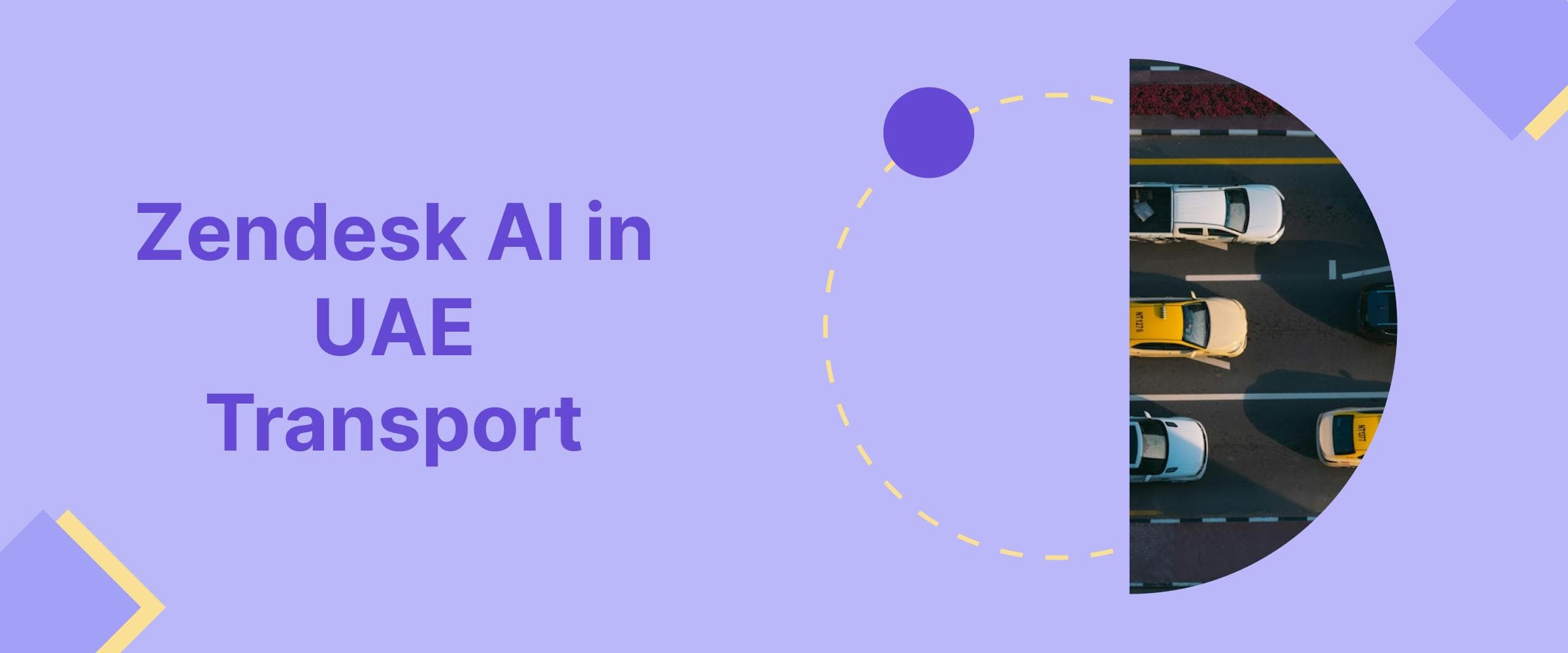
Zendesk AI in UAE Transport
The UAE’s transportation sector is a backbone of its economy, from Dubai’s bustling ports to Abu Dhabi’s international airports, and from inter emirate bus networks to smart ride hailing services. In such a high demand, fast paced industry, providing responsive, multilingual, and efficient customer service is as important as running the transport operations themselves. Zendesk’s AI capabilities have emerged as a strong enabler for transport companies in the UAE. By blending automation with intelligent data handling, Zendesk AI helps transport providers handle passenger queries faster, support multiple languages common in the UAE, and maintain the level of service the market expects. The Current State of Customer Service in UAE Transport The UAE transport landscape is diverse: Air travel: Emirates, Etihad, Air Arabia, and FlyDubai operate at a global scale, attracting travelers from hundreds of countries. Public transport: The Roads and Transport Authority (RTA) in Dubai and similar bodies in other emirates run buses, metros, and marine transport. Logistics and freight: Jebel Ali Port, Dubai International Airport, and Khalifa Port handle millions of Tonnes of cargo annually. Private mobility services: Careem, Uber, and local taxi services move thousands of passengers daily. All these services rely on accurate, fast, and multilingual customer support. Queries range from lost baggage and schedule changes to fare disputes and shipment tracking. The sheer variety of requests makes it challenging to maintain quick responses especially during peak travel seasons, weather disruptions, or public holidays. Why Zendesk AI Fits UAE Transport Zendesk AI isn’t a one-size-fits-all solution; it’s a set of AI-powered tools designed to meet sector-specific needs. In transport, these needs often involve: Handling time sensitive queries where delays can cause immediate inconvenience. Understanding and communicating in multiple languages particularly Arabic, English, Hindi, and Urdu. Providing round-the-clock assistance for passengers and shippers in different time zones. Managing seasonal spikes during events like Expo, New Year, or major conferences. Zendesk AI addresses these requirements through automation, intelligent routing, predictive suggestions, and natural language understanding tailored to multilingual contexts. Core Zendesk AI Features for UAE Transport 1. Multilingual Natural Language Processing (NLP) Transport customers in the UAE often start conversations in their preferred language. Zendesk AI uses NLP models trained to recognize Arabic dialects alongside English, Hindi, and Urdu. This allows systems to: Understand local phrases and transport-specific terms. Avoid misinterpretations that could cause service delays. Automatically match the query with the best-suited agent or automated response. 2. Automated Triage and Routing When a customer sends a query, For example, “My flight from Abu Dhabi to Mumbai is delayed, what are my options?” Zendesk AI can: Detect urgency based on keywords like “delayed” or “canceled.” Route the ticket to an operations desk rather than a general helpdesk. Escalate VIP passenger or high value cargo queries to priority queues. This prevents time loss from manual sorting, which is critical in the transport sector. 3. AI-Powered Self-Service Zendesk’s AI integrates with knowledge bases to suggest instant answers. For example: A commuter can ask, “What’s the last metro from BurJuman to Expo 2020 station?” and get an immediate response from the bot. A freight client can check “Has my shipment cleared customs?” without waiting for an agent. Self service reduces call volumes and gives passengers a sense of control over their journeys. 4. Predictive Response Suggestions When agents do need to step in, Zendesk AI can suggest replies based on historical cases. This: Cuts down the time agents spend drafting responses. Ensures consistent and accurate information across teams. Helps new hires handle complex queries faster during peak operations. 5. Sentiment and Context Analysis Zendesk AI does not just read the words, it detects sentiment. If a passenger expresses frustration (“I’ve missed my connection because your bus was late”), the system can: Flag the ticket for urgent handling. Recommend a more empathetic tone in the agent’s reply. Trigger follow up workflows like offering vouchers or priority booking. Real World Applications in UAE Transport Airlines Emirates and Etihad handle millions of passengers every year. Zendesk AI helps their support teams manage: Delays and rebooking's in real time. Baggage claims tracking without manual intervention. Multilingual inquiries from international passengers. Public Transport The RTA in Dubai can use Zendesk AI to: Provide real time metro, bus, and marine transport updates via chatbots. Manage service change alerts during construction or public events. Handle lost-and-found queries faster. Logistics Providers Freight companies and port operators can: Automated shipment tracking updates. Predict and prioritize urgent customs-related queries. Provide instant answers about tariffs, routes, and documentation. Ride Hailing Services For apps like Careem or Uber: AI can detect refund requests from ride-related complaints. Automated driver onboarding queries. Offer self service trip history and payment issue resolution. Benefits for UAE Transport Operators 1. Faster Response Times In the UAE transport industry, delays in answering customer queries can cause real world disruptions. A missed update about a delayed bus, a late baggage notification, or an unanswered freight status request can directly affect travel plans or logistics schedules. Zendesk AI eliminates much of the manual sorting and back-and-forth that slows down responses. Automated classification means incoming tickets are tagged according to their nature, for example, “urgent flight rebooking” or “cargo customs query” without waiting for a human to review them. Instant suggested replies help agents respond to common questions in seconds rather than minutes. This speed is crucial for peak travel times like Eid holidays or tourist seasons, when thousands of passengers expect quick updates. 2. Scalability During Peak Demand Transport services in the UAE often experience sharp increases in customer interactions during major events like the Dubai Airshow, Formula 1 Grand Prix in Abu Dhabi, or Hajj season. Traditionally, handling this surge meant hiring temporary staff, which can be costly and time consuming. Zendesk AI lets companies process significantly higher volumes of requests without a proportional increase in manpower. Bots and automation handle routine queries, leaving agents free to tackle more complex cases. Scaling support in this way ensures customers still receive timely assistance, even when demand triples overnight. 3. Improved Passenger Satisfaction In a competitive transport market, the quality of customer service often determines whether someone becomes a repeat customer. For airlines, public transport operators, or ride hailing services, satisfaction is closely linked to how quickly and accurately they respond to concerns. Zendesk AI ensures passengers don’t have to repeat information multiple times, as it keeps context throughout the conversation. AI-driven sentiment analysis alerts agents when a customer is frustrated, prompting a more empathetic approach. Consistent and correct answers, whether from a bot or a live agent, reduce misunderstandings, leading to a smoother overall experience. 4. Operational Cost Savings Transport companies face high operational expenses, from fuel and maintenance to compliance and staffing. Customer service can be a significant cost center if handled inefficiently. AI automation reduces the number of repetitive tickets human agents need to handle, lowering staffing costs without reducing service quality. Self-service options, like AI-powered FAQs or shipment tracking portals, reduce inbound call and email volumes. Resources saved from routine support can be redirected to higher value operational improvements, such as improving fleet punctuality or investing in better passenger facilities. 5. 24/7 Multilingual Support The UAE’s transport users are incredibly diverse, from Emiratis to expatriates and tourists from all over the world. Many prefer to communicate in their native language, especially when resolving important travel or logistics issues. Zendesk AI understands and responds in Arabic (including Emirati dialect), English, Hindi, and Urdu, covering the majority of passenger and freight customer needs in the UAE. Support remains available at all hours, which is essential for international flights, freight movements, and inter emirate bus services that operate late at night. This round-the-clock, multilingual assistance builds trust with customers, who know they can get help whenever and however they need it. Challenges and How Zendesk AI Overcomes Them Challenge 1: Dialect Differences in Arabic Even within the UAE, Arabic varies by region and speaker background. Zendesk AI uses context based understanding, reducing misinterpretations that older bots often made. Challenge 2: Complex, Multi-Step Queries For example, a cargo client may need to know port arrival times, customs clearance, and onward transport availability in one conversation. Zendesk AI integrates with backend systems so it can pull and present this information without starting over. Challenge 3: Data Security in Transport Transport companies often handle sensitive personal and cargo information. Zendesk ensures compliance with ISO 27001, SOC 2, and GDPR, and can host data in UAE-based centers for added sovereignty. Future of Zendesk AI in UAE Transport As the UAE invests heavily in smart city initiatives, AI in customer service will become more integrated with physical transport systems. Potential future developments include: Proactive notifications: AI alerts passengers before delays occur. Voice enabled AI kiosks: For in terminal self service. Integration with IoT devices: Such as real time cargo trackers. These advancements will make transport services more predictive, less reactive, and even more customer focused. Final Thoughts Zendesk AI is not just a tech upgrade, it’s a way for UAE transport companies to meet rising customer expectations in a high demand, multilingual, and globally connected environment. From airports to ride hailing platforms, AI can handle the speed, volume, and complexity of transport queries without losing personal touch. Companies that adopt Zendesk AI today will be better positioned to deliver services that match the UAE’s vision for smart, seamless, and world class transportation.

Zendesk Voice for UAE Call Centers
Customer experience is no longer a value add in the UAE, it is the baseline. As digital adoption accelerates across the Emirates, today’s customers expect fast, personalized, and around the clock support. From the bustling e-commerce scene in Dubai to the fast paced healthcare sector in Sharjah and the logistics corridors of Abu Dhabi, businesses across the UAE face mounting pressure to respond instantly, resolve issues efficiently, and speak the customer’s language literally and culturally. In a region were convenience and trust drive loyalty, staying competitive means transforming your support operations from reactive to proactive. With high call volumes, multilingual customer needs, and the demand for instant answers, hiring more agents might seem like the obvious solution but it’s not always sustainable. For businesses in fast paced markets like Dubai, Abu Dhabi, and beyond, Zendesk Voice acts like a digital front line. It filters, organizes, and resolves customer calls at a scale, reducing pressure on your team, cutting wait times, and improving consistency across every interaction. What Is Zendesk Voice? Zendesk Voice is a smart, cloud-powered call center tool that is seamlessly integrated within the Zendesk support platform. More than just routing calls to agents, it’s designed to actively engage with customers from the moment they reach out. With features like IVR (Interactive Voice Response) and automated workflows, Zendesk Voice can interact with customer queries, guide them through self-service options, or gather key information before involving a live agent. When a human touch is needed, it seamlessly routes the call along with the customer’s context and history to the most suitable support agent. This all-in-one approach simplifies communication, enhances response times, and improves the overall customer experience. It allows agents to handle calls directly from their Zendesk dashboard, streamlining workflows and improving customer interaction. Instead of switching between multiple tools or software, your team can make and receive calls, access customer history, and log tickets all in one place. Key Features of Zendesk Voice That Benefit UAE Call Centers 1. Intelligent Call Routing with IVR Zendesk Voice offers a built-in Interactive Voice Response (IVR) system, allowing customers to interact with an automated menu before speaking with an agent. This helps resolve basic queries quickly and ensures complex issues are routed to the right team. Especially in multilingual markets like the UAE, this improves call efficiency and reduces agent workload. 2. NLP Capabilities in Zendesk Voice Zendesk Voice utilizes Natural Language Processing (NLP) to improve its understanding and response to customer queries. When connected with AI-powered automation tools like Answer Bot, IVR flows, or chatbots, NLP helps interpret customer intent and deliver more relevant, human-like responses even over voice. 3. Inbound Call Management Zendesk Voice handles inbound calls directly from the Zendesk dashboard. Agents can take calls through their browser, see caller information in real time, and respond faster with full customer context. No need for external systems, everything runs inside Zendesk, improving productivity and response speed. 4. Automated Ticketing and Context Sharing Every call automatically generates a support ticket, capturing customer details, call recordings, and agent notes. This gives your team a complete view of the customer journey across channels voice, chat, email, and more. Agents don’t waste time gathering information, and customers don’t have to repeat themselves. 5. Post-Call Summaries and Transcriptions After each call, Zendesk Voice can generate a call summary and transcription, which is saved automatically in the agent’s workspace. These transcripts improve follow-up accuracy, reduce manual notetaking, and help with future case references. Ideal for regulated industries or multilingual teams where clear records are essential. 6.Quality Assurance Tools Supervisors can listen to call recordings, review transcripts, and assess agent performance for training or compliance purposes. Zendesk also supports tagging and internal notes, helping QA teams give timely feedback. This is especially valuable in sectors like finance, logistics, and healthcare, where accuracy and professionalism are key. 7.Real-Time Analytics and Dashboards Zendesk Voice provides actionable insights like call volume, response time, agent activity, and more. Managers can monitor live data to adjust staffing, reduce bottlenecks, and optimize the support process in real time. Data-backed decisions lead to better service and higher customer satisfaction. 8. Scalability Without Infrastructure Costs As a fully cloud-based platform, Zendesk Voice eliminates the need for expensive hardware or on-premises phone systems. UAE businesses can expand or adapt easily whether they’re a growing startup or a large-scale enterprise. This flexibility supports rapid growth without overhead. 9. Enterprise-Grade Compliance and Data Security For all companies, customer data privacy is essential. Zendesk voice complies with international data protection standards and allows you to configure permissions and access controls. You can also choose data center locations, adding a layer of compliance control for regulated industries. 10. Easy Setup for UAE Teams Zendesk Voice doesn’t require physical telephone systems (PBX) or telecom contracts. UAE businesses can launch it in just a few hours. All you need is a Zendesk account, a stable internet connection, and headsets for your team. For distributed or remote call center setups, this is a game-changer. Zendesk Voice in Action: What Makes It Click? <!DOCTYPE html> <html> <head> <style> table { font-family: arial, sans-serif; border-collapse: collapse; width: 100%; } td, th { border: 1px solid #dddddd; text-align: left; padding: 8px; } tr:nth-child(even) { background-color: #dddddd; } </style> </head> <body> <table> <tr> <th>Feature </th> <th>Benefit </th> </tr> <tr> <td>1-Zendesk AI </td> <td>Automates answers to common queries</td> </tr> <tr> <td>2-NLP and IVR </td> <td>Smart routing in multiple languages </td> </tr> <tr> <td>3-Transcripts & Call Logs </td> <td>Boosts follow-up quality and QA reviews</td> </tr> <tr> <td>4-Zendesk Suite Integration </td> <td>One view across chat, email, WhatsApp, and calls</td> </tr> <tr> <td>5-UAE Phone Number Support </td> <td>Builds local trust with customers </td> </tr> <tr> </tr> </table> </body> </html> Why Zendesk Voice Works for UAE Businesses 1. Effortlessly Manages Busy Call Traffic When many calls come in, Zendesk Voice helps right away. It works like a smart traffic controller. It sends each call to the right agent. Your team doesn’t need to sort the calls. This saves time and reduces confusion. Customers don’t have to wait long. Calls are shorter and faster. Everyone gets help more quickly and easily. 2. Cloud-Based and Scalable Call centers in the UAE handle many inbound and outbound calls. This is common in industries like travel, retail, and logistics. Zendesk Voice runs in the cloud, so no need for heavy hardware. You can easily increase or decrease capacity as needed. It helps you manage busy times without extra cost or setup. This keeps your service smooth and efficient, even during peak hours. 3. Local Number Support Customers trust businesses with local phone numbers. Zendesk Voice lets UAE businesses set up local UAE numbers. You can create different numbers for each department or region. This makes your business feel local to customers. Even if your support team is remote, customers feel closer. It builds trust and improves the customer experience. 4. Takes Care of Repetitive Questions Many customers ask the same questions repeatedly. Common ones include: “Where’s my order?” or “How do I reset my password?” Zendesk Voice answers these questions automatically. It uses AI to respond without needing a live agent. This saves time and reduces the workload for your team. Agents can then focus on more complex issues. It leads to better service and happier customers. 5. Reducing High Employee Turnover & Burnout In the UAE, new innovations are happening quickly. This leads to more customer questions. Call centers often need more staff to handle the demand. But Zendesk Voice can answer common questions automatically. This reduces the need for many agents. It lowers stress on employees and prevents burnout. As a result, employee turnover goes down. This benefits companies in the UAE by saving costs and keeping staff happy. Why More Call Centers in the UAE Are Choosing Zendesk Voice Traditional call systems often struggle to keep up with modern customer expectations. Zendesk Voice offers: Lower operational costs Centralized support across channels Improved first-call resolution rates Real-time performance monitoring Whether you’re a fast-growing startup in Dubai or an established enterprise in Abu Dhabi, Zendesk Voice equips your support team with the tools to handle voice support professionally and efficiently. Zendesk voice vs. Other voice solutions <!DOCTYPE html> <html> <head> <style> table { font-family: arial, sans-serif; border-collapse: collapse; width: 100%; } td, th { border: 1px solid #dddddd; text-align: left; padding: 8px; } tr:nth-child(even) { background-color: #dddddd; } </style> </head> <body> <table> <tr> <th>Features </th> <th>Zendesk Voice </th> <th>Twilio </th> <th>Avaya </th> <th>Freshdesk Voice</th> </tr> <tr> <td>UAE localization </td> <td>yes</td> <td>No</td> <td>yes</td> <td>Limited</td> </tr> <tr> <td>Zendesk Integration </td> <td>Native</td> <td>External</td> <td>No</td> <td>Partial</td> </tr> <tr> <td>Ease of Use </td> <td>Very easy </td> <td>Requires coding</td> <td>Complex</td> <td>Moderate</td> </tr> <tr> <td>Cloud based </td> <td>Fully</td> <td>Yes</td> <td>No</td> <td>Yes</td> </tr> <tr> <td>Pricing</td> <td>Affordable plans </td> <td>Expensive</td> <td>Expensive</td> <td>Similar</td> </tr> <tr> </table> </body> </html> FAQ’S Q1. Is Zendesk Voice compliant with UAE data and telecom regulations? Zendesk adheres to global data protection and privacy standards, and it offers the flexibility to configure settings according to local compliance needs. However, businesses should also consult local telecom regulations when setting up call routing or local number services. Q2. Is Zendesk Voice compliant with UAE data privacy laws? Zendesk follows ISO 27001, SOC 2, and GDPR standards. Additionally, businesses can opt for data residency in the UAE or GCC region via approved hosting partners or Zendesk integrations. For government or semi-government entities, Zendesk can be configured to meet additional compliance layers Q3. How does Zendesk Voice help reduce call handling times? Zendesk Voice uses AI to understand caller intent, respond to common queries automatically, and route calls to the right agents with all relevant contexts. This reduces time spent on repetitive questions and helps agents resolve calls more quickly Q4. Can I use my existing UAE landline or toll-free number with Zendesk Voice? Yes, you can port your UAE number (landline or 800/600 numbers) into Zendesk Voice with the help of local telco providers. Alternatively, Zendesk offers virtual numbers from over 90 countries, including the UAE. Q5. How are Zendesk Voice recordings stored and are they encrypted? Yes, call recordings are encrypted at rest and in transit. Recordings are stored on Zendesk's servers and follow AES-256 encryption. Access is role-restricted, and you can set automatic deletion policies based on UAE or GCC data retention regulations. Q6. How do I get started with Zendesk Voice in the UAE? Getting started is simple. You can activate Zendesk Voice within your Zendesk account, choose your preferred phone number (including local UAE options), set up your IVR flow, and start making or receiving calls right from your browser. Final Thoughts Zendesk Voice gives UAE businesses the power to handle calls smarter not harder. With AI, local number support, and seamless integration, it transforms customer service into a faster, more reliable experience. Whether you’re scaling or simplifying, it’s built to grow with you. If you're looking to: Cut down call queues, Improve response quality, Support multilingual customers, And empower your team with smarter tools Zendesk Voice is the solution. Want to upgrade your voice support? Start with Zendesk UAE today. Connect with a Zendesk partner like 3li Global today and start delivering voice support that truly speaks your customer’s language.
Support Bots with Zendesk UAE: The Smart Way to Scale Customer Service
UAE companies from logistics to fintech face an undeniable reality: customer expectations have skyrocketed. Whether it is a Dubai-based e-commerce startup managing hundreds of WhatsApp inquiries or a healthcare provider offering multilingual patient support, delivering fast, accurate, and personalized customer service is no longer optional. It’s expected. That’s where Support Bots with Zendesk UAE comes into play. These AI-powered assistants are not just fancy add-ons. They’re strategic assets that help you serve more customers, reduce costs, and improve agent efficiency without compromising quality. Whether you’re scaling up your CX team or looking to improve first-response times, Zendesk’s support bots are built to help you thrive. Let’s explore how support bots powered by Zendesk’s AI are transforming customer service in the UAE and why more businesses are making the shift. What Are Support Bots in Zendesk? Zendesk’s support bots are AI-driven virtual assistants built into the Zendesk platform. They engage with customers in real-time, answer common queries, triage requests, and escalate to human agents when needed. These bots are powered by Zendesk AI and automation tools, including: Flow Builder for creating conversation workflows AI-powered intent detection Custom triggers and automation Integration with channels like WhatsApp, web chat, email, and voice Unlike traditional bots that often frustrate users with rigid flows, Zendesk bots are smart and adaptive. They use machine learning to understand context, sentiment, and intent, making every interaction more human-like. Why UAE Businesses Need Zendesk Support Bots Let’s break down why support bots are becoming essential for customer-focused businesses in the UAE. 1. 24/7 Multilingual Support for a Diverse Market The UAE is home to a diverse population and workforce, with customers speaking Arabic, English, Hindi, Urdu, Tagalog, and more. Zendesk bots support multilingual communication, ensuring customers get help in their preferred language any time of day. Whether you’re supporting Dubai tourists, Abu Dhabi patients, or Sharjah-based delivery clients, Zendesk AI ensures no one is left waiting. With Zendesk’s WhatsApp integration (crucial in the UAE), bots can handle high-volume messages instantly. 2. Cost-Effective Scaling Without Hiring More Agents Hiring and training new agents takes time and money. Support bots let you scale instantly without increasing headcount. Zendesk bots can handle thousands of inquiries per day answering FAQs, processing returns, checking order status, and more. Agents only jump in when a human touch is truly needed. This leads to: Reduced operational costs Faster resolution times Happier agents with less burnout 3. Seamless Integration with WhatsApp, Email, and Voice In the UAE, WhatsApp is a business lifeline. Zendesk bots integrate directly with WhatsApp, web chat, email, and even voice to offer omnichannel support. Customers can start a conversation on WhatsApp, continue web chat, and get a call if needed without repeating themselves. The bot keeps track of it all, improving the customer experience and reducing friction. 4. Intelligent Routing and Escalation Not every query should be handled by a bot. Zendesk bots are smart enough to know when it’s time to escalate to a human agent. Using AI intent detection and custom rules, bots can: Route high-priority tickets to expert agents Tag and categorize tickets for better triaging Transfer conversations with full context, so agents don’t need to ask the same questions again This means less back-and-forth, faster resolutions, and more efficient teams. How Zendesk Bots Work: A Quick Look at the Workflow Let’s walk through a real-world example of how a Zendesk bot might work for a UAE e-commerce brand: 📦 Scenario: Order Not Received Customer initiates a WhatsApp chat. "Hi, I haven’t received my order yet." Zendesk Bot responds instantly. "I can help with that! Can you please share your order number?" Customer provides order number. "It's #12345." Bot checks order status via integration with your backend. "Your order was dispatched on July 20th and is currently with the courier. Estimated delivery: July 28th." Customer needs more help. "I want to cancel it now." Bot provides options or escalates. "I can initiate cancellation or connect you with a customer care agent. What would you prefer?" Customer chooses to speak to an agent. Bot routes the query with full context to a human agent who continues seamlessly. This flow saves 5–7 minutes per query, reduces human workload, and improves satisfaction. Zendesk Support Bots vs Traditional Chatbots 1. AI Capabilities Zendesk Support Bots are AI-powered, meaning they use advanced machine learning to understand customer intent, learn over time, and deliver intelligent responses. In contrast, traditional bots are usually rule-based, following predefined scripts that can’t adapt well to unexpected queries. 2. Natural Language Understanding (NLU) With Zendesk, bots come equipped with robust natural language understanding, enabling them to grasp sentence structures, tone, and context. Traditional bots often offer limited NLU, resulting in stiff, frustrating conversations that break easily with slight variations in customer input. 3. Omnichannel Integration Zendesk bots integrate seamlessly with WhatsApp, email, voice, and live chat, ensuring customers get support on the channels they use most critical in the UAE. Traditional bots often have complex or missing integrations, requiring third-party tools or manual workarounds. 4. Multilingual Support In a multicultural environment like the UAE, multilingual support is crucial. Zendesk bots come with built-in multilingual capabilities, making it easy to serve customers in Arabic, English, Hindi, and more. Traditional chatbots usually need manual language setup, slowing down implementation and limiting reach. 5. Intent Detection & Smart Routing Zendesk’s AI can detect user intent and route requests smartly whether to self-service, a knowledge base, or the right live agent. This ensures fast, relevant answers. Traditional bots rely on basic keyword routing, which often leads to wrong hand-offs and repeated questions. 6. Ease of Use (No-Code Builder) Zendesk provides a no-code Flow Builder, allowing non-technical teams to build, test, and deploy bots quickly. You don’t need developers to get started or make updates. Traditional bots typically require developer support, which adds cost and delays to deployment. 7. Part of a Complete CX Suite Zendesk bots are part of a comprehensive Customer Experience (CX) suite, which includes ticketing, analytics, CRM integration, and AI tools all in one platform. In contrast, traditional bots are often standalone tools, making integration with your existing systems difficult and inconsistent. Where Support Bots Shine in the UAE Market 🚚 Logistics & Last-Mile Delivery Real-time package tracking via bot Instant updates on delays or rescheduling Reduces load on contact centers 🏥 Healthcare & Clinics Book/cancel appointments Send lab results securely Arabic + English bot support for patients 🛒 E-commerce & Retail Process returns and refunds Answer product availability questions Provide order updates instantly 💳 Fintech & Banking Transaction FAQs Password resets or 2FA help Escalation for complex queries like fraud detection 🏨 Hospitality & Tourism Bookings, check-ins, and concierge info via chat Multilingual support for tourists Sync with CRM and ticketing tools Zendesk Implementation UAE: How to Get Started 1. Discovery Phase This is where you lay the groundwork to ensure your bot strategy aligns with your support goals. Audit Common Support Queries Analyze past tickets, FAQs, and chat logs to identify repeated questions and high-volume topics. These often include order status, delivery issues, account login, and refund policies. Map Key Use Cases by Channel Decide where the bot should operate: WhatsApp (a preferred channel in the UAE) Email (automated replies and triage) Web Chat (lead gen + customer support) Social Media (Instagram, Facebook via Zendesk integrations) Define Goals Are you trying to reduce ticket volume, improve response times, or support agents during off-hours? Defining this helps shape the bot logic. 2. Bot Design With Zendesk’s Flow Builder, you don’t need developers to build smart, useful bots. Build Intuitive Flows Use the drag-and-drop interface to design conversations. You can customize greetings, FAQs, routing logic, and fallback options for when human handoff is needed. Upload Training Data Feed the bot with FAQs, knowledge base articles, and past tickets. Use Arabic and English content to ensure multilingual fluency. Zendesk’s AI models are pre-trained and learn quickly with real company data. Personalization Setup Include customer data (e.g., name, order history) to make conversations feel more human. Set conditions for different types of users (new vs returning, VIP customers, etc.) 3. Pilot Launch Testing in a controlled environment is crucial before a full rollout. Start with a Small User Group Pick one channel (e.g., WhatsApp) and test the bot with internal users or a sample group of customers. Gather Feedback Monitor confusion points and dead ends in bot conversations. Ask users if their issue was resolved and how they rate the experience (CSAT). Adjust flows based on real feedback. 4. Go Live Once tested, you’re ready to deploy across your main customer-facing channels. Enable Across All Channels Ensure consistency across web, WhatsApp, email, and social platforms. Activate Smart Routing Use Zendesk AI to escalate complex issues to live agents. Route Arabic queries to Arabic-speaking agents, and English to English speakers. Ensure Multilingual Support Zendesk bots can switch languages automatically. Include Arabic dialects, Hindi, and Urdu if relevant to your customer base. Set Up Metrics Tracking Use Zendesk Explore to track: Resolution Time Ticket Deflection Rate Agent Workload Customer Satisfaction (CSAT) 5. Optimization & Continuous Training Zendesk AI gets smarter over time but you need to feed it the right data. Use AI-Powered Dashboards Spot patterns like repeated questions, rising frustration points, and where handoffs are most frequent. Retrain with New Data Add new FAQs regularly. Incorporate new product info or seasonal changes (e.g., Ramadan-related policies). Train the bot to handle new types of issues based on recent support trends. A/B Test Flows Test different greeting messages or answer structures to see what improves engagement and resolution speed. Why Zendesk Bots Are Future-Proof What sets Zendesk apart isn’t just that it has bots, it is that the entire Zendesk Suite is built to grow with your business. Support bots are just one piece of a platform that includes: Agent Workspaces AI-powered ticketing Reporting and analytics CRM integrations Workforce management This means you’re not bolting on another tool you’re investing in a unified CX ecosystem that future-proofs your business in a competitive UAE market. Final Thoughts: Bots That Work Like Teammates Think of them as reliable teammates who never sleep. They take care of the repetitive tasks, the midnight customer inquiries, and the never ending flow of multilingual questions that often slow down your team. By handling routine conversations with speed and accuracy, these bots free up your human agents to focus on what truly matters empathy, problem solving, and building real customer relationships. In a country as dynamic and service driven as the UAE, this kind of support is not just helpful it’s essential. Whether you are a logistics powerhouse in Dubai navigating tight delivery windows, a healthcare provider in Abu Dhabi coordinating multilingual patient care, or an ambitious startup in Sharjah aiming for rapid growth, Zendesk bots can be your frontline heroes. They reduce operational costs, boost response speed, and ensure no message goes unanswered regardless of time, language, or volume. For forward-thinking UAE businesses, this is not the future. It’s the now. And with Zendesk, it is never been easier to put smarter service at the heart of your customer experience. Talk to a Zendesk partner in the UAE today to see how support bots can elevate your business. 👉 Contact us now for a free consultation.