Loading

Loading

Our team architects cloud solutions on AWS, Azure, and Google Cloud Platform, leveraging Kubernetes for orchestration and Terraform for infrastructure automation to build scalable, resilient systems.
The world's most comprehensive cloud platform with 200+ services covering compute, storage, databases, machine learning, and analytics. 3Li Global helps businesses leverage AWS's global infrastructure to build scalable, reliable, and cost-effective solutions.
You're not alone. These technology challenges cost businesses millions in lost opportunities, security incidents, and competitive disadvantage every year.
Frequent server crashes, application failures, and network issues disrupt operations, costing your business thousands in lost productivity and revenue every hour.
Outdated systems, unpatched software, and inadequate security measures leave you exposed to ransomware, data breaches, and compliance violations that could devastate your business.
Old, inflexible technology stacks prevent innovation, slow down development cycles, and make integrating modern tools nearly impossible—keeping you stuck in the past.
Your infrastructure can't handle business growth, peak traffic, or seasonal spikes—resulting in slow performance, crashed systems, and lost opportunities during critical moments.
Expensive on-premise hardware, rising licensing fees, and inefficient resource allocation drain your budget while delivering diminishing returns on technology investments.
You can't find, hire, or retain skilled engineers with expertise in cloud platforms, DevOps, security, and modern development practices—leaving critical gaps in your capabilities.
of businesses say their IT infrastructure is holding back growth and innovation, preventing them from competing effectively.
It doesn't have to be this way.
Comprehensive technology solutions from strategy to execution. Whether you're migrating to the cloud, modernizing applications, or need ongoing support, we've got you covered.
Seamless migration from on-premise to AWS, Azure, or Google Cloud with zero downtime. We architect scalable, cost-optimized infrastructure that grows with your business while reducing operational overhead by up to 40%.
Build automated deployment pipelines, infrastructure-as-code, and continuous integration workflows that accelerate software delivery from weeks to hours—enabling rapid innovation and faster time-to-market.
Comprehensive security assessments, penetration testing, vulnerability management, and compliance frameworks (GDPR, HIPAA, SOC 2) to protect your data, reputation, and customer trust from evolving threats.
Build modern web applications, mobile apps, APIs, and integrations using cutting-edge frameworks. From proof-of-concept to production-ready systems that solve complex business challenges.
Technology roadmaps, architecture reviews, vendor selection, and digital transformation strategies aligned with your business goals. We help you make informed decisions that maximize ROI and minimize risk.
24/7 infrastructure monitoring, proactive maintenance, helpdesk support, and incident response. Focus on your core business while we handle servers, security, backups, and everything in between.

Seamless migration from on-premise to AWS, Azure, or Google Cloud with zero downtime. We architect scalable, cost-optimized infrastructure that grows with your business while reducing operational overhead by up to 40%.
Build automated deployment pipelines, infrastructure-as-code, and continuous integration workflows that accelerate software delivery from weeks to hours—enabling rapid innovation and faster time-to-market.
Comprehensive security assessments, penetration testing, vulnerability management, and compliance frameworks (GDPR, HIPAA, SOC 2) to protect your data, reputation, and customer trust from evolving threats.

Build modern web applications, mobile apps, APIs, and integrations using cutting-edge frameworks. From proof-of-concept to production-ready systems that solve complex business challenges.
Technology roadmaps, architecture reviews, vendor selection, and digital transformation strategies aligned with your business goals. We help you make informed decisions that maximize ROI and minimize risk.
24/7 infrastructure monitoring, proactive maintenance, helpdesk support, and incident response. Focus on your core business while we handle servers, security, backups, and everything in between.
Not sure which services you need?
Get AssessmentA proven methodology for cloud migration and IT modernization, from initial infrastructure assessment through secure implementation and 24/7 operational support.
We conduct a comprehensive audit of your current systems, security posture, and compliance requirements to identify risks and improvement opportunities. This technical assessment covers architecture, performance bottlenecks, security vulnerabilities, and cost optimization potential to establish a clear transformation roadmap.
Our architects design your cloud infrastructure, microservices architecture, and CI/CD pipeline based on industry best practices and your specific requirements. This includes selecting cloud providers, defining networking topology, planning disaster recovery, and creating a phased migration strategy that minimizes business disruption.
We build your cloud infrastructure using infrastructure-as-code, containerize applications, and automate deployment pipelines. This phase includes setting up development, staging, and production environments, implementing monitoring and alerting, and configuring auto-scaling policies to handle traffic variations efficiently.
Our security experts implement comprehensive protection measures including firewalls, encryption, access controls, and continuous security audits. We configure identity and access management, enable audit logging, set up intrusion detection, and ensure compliance with GDPR, HIPAA, or industry-specific regulatory requirements.
We execute a carefully orchestrated migration of workloads to the new infrastructure, conduct thorough load testing, and perform user acceptance testing. This includes data migration with integrity verification, performance benchmarking, disaster recovery drills, and rollback procedures to ensure zero data loss and minimal downtime.
After go-live, we provide 24/7 infrastructure monitoring, proactive incident response, and continuous optimization of your cloud environment. This ongoing support includes security patch management, performance tuning, cost optimization reviews, and regular architecture assessments to keep your systems secure, efficient, and scalable.
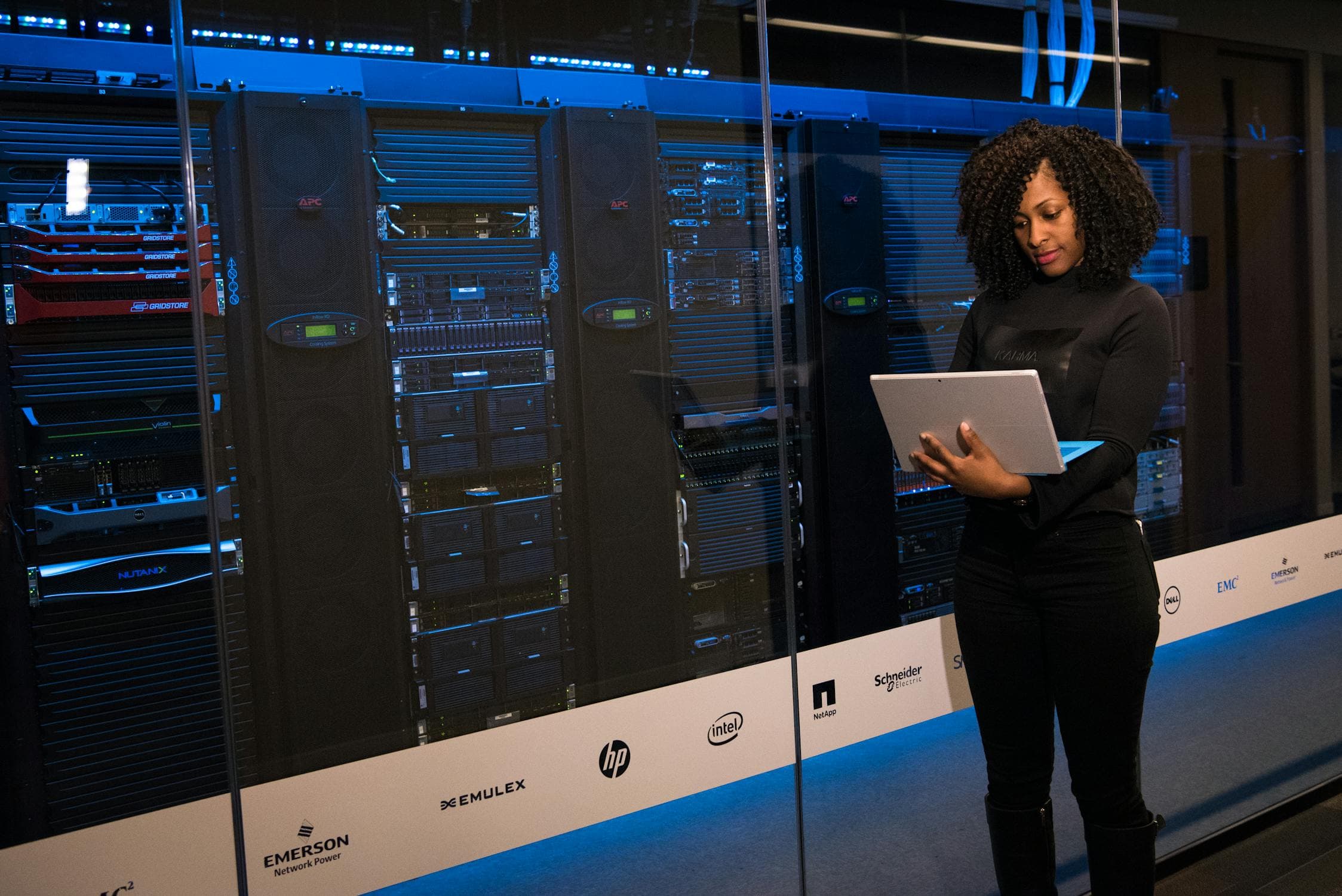
A fast-growing fintech startup partnered with 3Li Global to migrate from expensive co-located servers to AWS. We containerized their monolithic application, implemented auto-scaling infrastructure, and built CI/CD pipelines with Terraform and GitHub Actions. The migration reduced their infrastructure costs by 47% while improving reliability from 99.5% to 99.95% uptime.
IT projects have a notorious reputation for going over budget and schedule. What started as a 'simple' cloud migration becomes a multi-year odyssey as requirements expand, unexpected dependencies surface, and stakeholders keep adding features.
Cloud-optimized architecture typically cuts infrastructure costs 30-50% compared to on-premise. Pay for what you use, scale down during off-peak, eliminate hardware refresh cycles.
Our clients see average savings of 40% within the first year, with continued optimization driving additional savings as cloud providers release new services and pricing options.
Move from 99.5% uptime to 99.99%. Auto-healing infrastructure, automatic failover, and global distribution mean your systems stay running even when components fail.
Cloud providers invest billions in redundancy that no single company could afford. We architect your systems to take full advantage of that reliability.
Modern CI/CD pipelines with automated testing catch bugs before production. Deploy 10x more frequently with 95% fewer incidents. Rollback instantly when issues arise.
Infrastructure-as-code means environments are reproducible and auditable. No more 'works on my machine' or configuration drift between staging and production.
Cloud security tools provide capabilities that would cost millions to build in-house. Encryption, compliance automation, threat detection, and identity management—all integrated from day one.
Our security-first approach ensures you're protected from the start, not scrambling to patch vulnerabilities after an audit or breach.

Cloud migration, infrastructure modernization, and DevOps transformation are complex undertakings that require deep technical expertise and careful planning. The cloud landscape—spanning AWS, Azure, Google Cloud, and hybrid solutions—offers tremendous flexibility, but each platform has unique strengths, pricing models, and architectural patterns that demand specialized knowledge.
To ensure successful IT transformation, consider partnering with experienced cloud engineers like 3Li Global to guide technology selection, architecture design, migration execution, and ongoing optimization of your infrastructure investments.
Transform your IT infrastructure with 3Li Global
Several key factors influence the scope and complexity of a cloud migration project:
Current infrastructure: Number of servers, applications, and dependencies that need to be assessed and migrated.
Application architecture: Monolithic applications require different approaches than microservices or containerized workloads.
Data considerations: Volume of data, compliance requirements, and real-time sync needs during migration.
Integration landscape: Connections to on-premise systems, third-party services, and hybrid cloud requirements.
Business continuity: Downtime tolerance and requirements for parallel running during transition.
Compliance requirements: Industry regulations (HIPAA, PCI-DSS, SOC 2) that affect architecture and documentation.
We offer free cloud readiness assessments to evaluate your specific situation and recommend the best migration path.
Migration timelines depend on application complexity and data volumes. Typical ranges:
Simple lift-and-shift (minimal changes): 4-12 weeks for basic infrastructure migration.
Re-platforming (some optimization): 3-6 months for containerization and cloud-native refactoring.
Full modernization (microservices, serverless): 6-18 months for comprehensive transformation.
We use phased migration approaches to minimize risk—your business stays operational throughout the process.
Each platform has strengths for different use cases:
AWS: Largest market share, most mature services, best for startups and tech companies. Widest service catalog.
Azure: Best Microsoft integration, ideal for Windows-heavy enterprises and hybrid cloud scenarios. Strong enterprise adoption.
Google Cloud Platform: Best for data analytics, machine learning, and Kubernetes. Competitive pricing and per-second billing.
We're certified across all three platforms and recommend based on your existing technology stack, team skills, and specific requirements—not vendor bias.
Security is embedded in every phase of our migration process:
Pre-migration assessment: Identify security gaps, compliance requirements, and data sensitivity classifications.
Encrypted data transfer: All data moves over encrypted channels with end-to-end verification.
Zero-trust architecture: Implement identity-based access, network segmentation, and least-privilege principles.
Compliance frameworks: Configure cloud environments to meet GDPR, HIPAA, SOC 2, PCI-DSS, or industry-specific standards.
Post-migration hardening: Penetration testing, security monitoring, automated threat detection, and incident response planning.
DevOps is a methodology that combines software development and IT operations to accelerate delivery and improve reliability.
Why it matters: Companies practicing DevOps deploy code 200x more frequently, recover from failures 24x faster, and have 3x lower change failure rates.
Key practices we implement: Automated CI/CD pipelines for rapid, safe deployments; Infrastructure-as-code for reproducible environments; Continuous monitoring and feedback loops; Collaborative culture between development and operations teams.
The result: Faster innovation, fewer production incidents, and better customer experiences.
We use multiple strategies to optimize your technology spending:
Right-sizing resources: Eliminate over-provisioned servers and unused capacity—typically saves 20-40%.
Reserved instances and savings plans: Lock in discounts for predictable workloads (30-70% savings vs on-demand).
Auto-scaling: Automatically adjust resources based on demand instead of provisioning for peak at all times.
Serverless and containers: Pay only for actual compute time, not idle server capacity.
Storage optimization: Intelligent tiering, lifecycle policies, and compression to reduce storage costs.
Continuous cost monitoring: Automated alerts and monthly reviews to catch cost anomalies before they spiral.
Our team holds industry-recognized certifications across cloud platforms and specializations:
AWS: Solutions Architect Professional, DevOps Engineer Professional, Security Specialty, Advanced Networking.
Microsoft Azure: Solutions Architect Expert, DevOps Engineer Expert, Security Engineer Associate.
Google Cloud: Professional Cloud Architect, Professional DevOps Engineer, Professional Cloud Security Engineer.
Additional: Certified Kubernetes Administrator (CKA), Certified Ethical Hacker (CEH), CISSP security certification.
We invest heavily in continuous training—every engineer completes 40+ hours of professional development annually.
Compliance is built into our architecture and processes from day one:
GDPR: Data residency controls, encryption at rest and in transit, right-to-erasure workflows, data processing agreements, audit logging.
HIPAA: HIPAA-eligible cloud services, Business Associate Agreements, access controls, encryption, audit trails, breach notification procedures.
SOC 2: Security controls, monitoring, incident response, annual audits.
We map your specific compliance requirements to technical controls and provide documentation for audits and certifications.
Cloud migration delivers measurable ROI across multiple dimensions:
Cost savings: 30-50% reduction in infrastructure costs over 3-5 years through eliminated hardware, reduced data center expenses, and optimized resource usage.
Operational efficiency: 60-70% reduction in time spent on infrastructure management, freeing IT teams for innovation.
Faster time-to-market: Deployments accelerate from weeks to hours, enabling rapid product iteration.
Improved reliability: 99.9%+ uptime SLAs vs typical 95-98% for on-premise infrastructure.
Scalability: Handle traffic spikes without expensive over-provisioning—pay only for what you use.
Most clients see positive ROI within 12-18 months of migration.
Yes—our managed services include comprehensive 24/7/365 coverage:
Infrastructure monitoring: Real-time alerts for performance degradation, security threats, and system failures.
Incident response: Critical issues addressed within 15 minutes, standard issues within 2 hours.
Proactive maintenance: Automated patching, security updates, and performance optimization.
Helpdesk support: Multi-channel support via phone, email, chat, and ticketing system.
Escalation procedures: Clear escalation paths with SLA guarantees for response and resolution times.
We also offer flexible support tiers—from business-hours support to full 24/7 coverage based on your needs and budget.
Several key factors influence the scope and complexity of a cloud migration project:
Current infrastructure: Number of servers, applications, and dependencies that need to be assessed and migrated.
Application architecture: Monolithic applications require different approaches than microservices or containerized workloads.
Data considerations: Volume of data, compliance requirements, and real-time sync needs during migration.
Integration landscape: Connections to on-premise systems, third-party services, and hybrid cloud requirements.
Business continuity: Downtime tolerance and requirements for parallel running during transition.
Compliance requirements: Industry regulations (HIPAA, PCI-DSS, SOC 2) that affect architecture and documentation.
We offer free cloud readiness assessments to evaluate your specific situation and recommend the best migration path.
Migration timelines depend on application complexity and data volumes. Typical ranges:
Simple lift-and-shift (minimal changes): 4-12 weeks for basic infrastructure migration.
Re-platforming (some optimization): 3-6 months for containerization and cloud-native refactoring.
Full modernization (microservices, serverless): 6-18 months for comprehensive transformation.
We use phased migration approaches to minimize risk—your business stays operational throughout the process.
Each platform has strengths for different use cases:
AWS: Largest market share, most mature services, best for startups and tech companies. Widest service catalog.
Azure: Best Microsoft integration, ideal for Windows-heavy enterprises and hybrid cloud scenarios. Strong enterprise adoption.
Google Cloud Platform: Best for data analytics, machine learning, and Kubernetes. Competitive pricing and per-second billing.
We're certified across all three platforms and recommend based on your existing technology stack, team skills, and specific requirements—not vendor bias.
Security is embedded in every phase of our migration process:
Pre-migration assessment: Identify security gaps, compliance requirements, and data sensitivity classifications.
Encrypted data transfer: All data moves over encrypted channels with end-to-end verification.
Zero-trust architecture: Implement identity-based access, network segmentation, and least-privilege principles.
Compliance frameworks: Configure cloud environments to meet GDPR, HIPAA, SOC 2, PCI-DSS, or industry-specific standards.
Post-migration hardening: Penetration testing, security monitoring, automated threat detection, and incident response planning.
DevOps is a methodology that combines software development and IT operations to accelerate delivery and improve reliability.
Why it matters: Companies practicing DevOps deploy code 200x more frequently, recover from failures 24x faster, and have 3x lower change failure rates.
Key practices we implement: Automated CI/CD pipelines for rapid, safe deployments; Infrastructure-as-code for reproducible environments; Continuous monitoring and feedback loops; Collaborative culture between development and operations teams.
The result: Faster innovation, fewer production incidents, and better customer experiences.
We use multiple strategies to optimize your technology spending:
Right-sizing resources: Eliminate over-provisioned servers and unused capacity—typically saves 20-40%.
Reserved instances and savings plans: Lock in discounts for predictable workloads (30-70% savings vs on-demand).
Auto-scaling: Automatically adjust resources based on demand instead of provisioning for peak at all times.
Serverless and containers: Pay only for actual compute time, not idle server capacity.
Storage optimization: Intelligent tiering, lifecycle policies, and compression to reduce storage costs.
Continuous cost monitoring: Automated alerts and monthly reviews to catch cost anomalies before they spiral.
Our team holds industry-recognized certifications across cloud platforms and specializations:
AWS: Solutions Architect Professional, DevOps Engineer Professional, Security Specialty, Advanced Networking.
Microsoft Azure: Solutions Architect Expert, DevOps Engineer Expert, Security Engineer Associate.
Google Cloud: Professional Cloud Architect, Professional DevOps Engineer, Professional Cloud Security Engineer.
Additional: Certified Kubernetes Administrator (CKA), Certified Ethical Hacker (CEH), CISSP security certification.
We invest heavily in continuous training—every engineer completes 40+ hours of professional development annually.
Compliance is built into our architecture and processes from day one:
GDPR: Data residency controls, encryption at rest and in transit, right-to-erasure workflows, data processing agreements, audit logging.
HIPAA: HIPAA-eligible cloud services, Business Associate Agreements, access controls, encryption, audit trails, breach notification procedures.
SOC 2: Security controls, monitoring, incident response, annual audits.
We map your specific compliance requirements to technical controls and provide documentation for audits and certifications.
Cloud migration delivers measurable ROI across multiple dimensions:
Cost savings: 30-50% reduction in infrastructure costs over 3-5 years through eliminated hardware, reduced data center expenses, and optimized resource usage.
Operational efficiency: 60-70% reduction in time spent on infrastructure management, freeing IT teams for innovation.
Faster time-to-market: Deployments accelerate from weeks to hours, enabling rapid product iteration.
Improved reliability: 99.9%+ uptime SLAs vs typical 95-98% for on-premise infrastructure.
Scalability: Handle traffic spikes without expensive over-provisioning—pay only for what you use.
Most clients see positive ROI within 12-18 months of migration.
Yes—our managed services include comprehensive 24/7/365 coverage:
Infrastructure monitoring: Real-time alerts for performance degradation, security threats, and system failures.
Incident response: Critical issues addressed within 15 minutes, standard issues within 2 hours.
Proactive maintenance: Automated patching, security updates, and performance optimization.
Helpdesk support: Multi-channel support via phone, email, chat, and ticketing system.
Escalation procedures: Clear escalation paths with SLA guarantees for response and resolution times.
We also offer flexible support tiers—from business-hours support to full 24/7 coverage based on your needs and budget.
At 3Li Global, we believe technology should empower your business, not complicate it. Our team of 50+ certified engineers delivers comprehensive IT solutions across 15+ countries—from cloud migration and infrastructure modernization to cybersecurity and DevOps automation. We don't just implement technology; we build scalable, secure foundations that drive innovation and competitive advantage.
We offer six core IT services: Cloud Migration, DevOps Implementation, Cybersecurity, Application Development, IT Consulting, and Managed Services. As certified partners of AWS, Microsoft Azure, and Google Cloud Platform, we help you modernize infrastructure, reduce costs, and accelerate innovation with the right technology stack.
certified IT engineers ready to modernize your technology infrastructure
countries where we've delivered successful IT transformations
uptime SLA for managed services and cloud infrastructure

In a market where customer relationships define success, technology is no longer optional, but it’s ...
The manufacturing world has evolved at an unprecedented rate. Today, building a great product is no...

Recall you would only type in a customer’s name, and add a few notes in CRM, and that was all, but t...

In a market where every customer interaction counts, generating leads is not the hardest part anymor...

In sales, time is one of your most valuable tools. The more time your team spends on manual tasks li...
...
Ready to transform your business? Tell us about your project and our CRM experts will craft a tailored roadmap to help you achieve your goals.